Goodwill Hunters: How Thrift Store Obsessives Are Scoring Gucci for Grocery Money
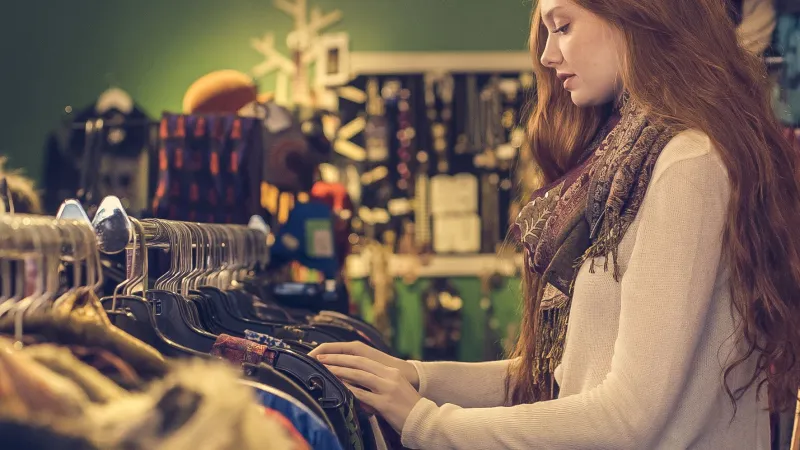
Let's paint a picture. It's 9 a.m. on a Saturday. Most sane adults are still horizontal, drooling into their pillows. But somewhere across America, a 28-year-old named Kayla is already elbow-deep in a bin of donated blazers at her local Goodwill, whispering "please be Versace" like a prayer. She finds a vintage Ralph Lauren wool coat for $6.99. She does a silent victory dance in the aisle. Nobody claps, but they absolutely should.
This is thrift culture in 2024 — part sport, part treasure hunt, part psychological warfare against your own wallet. And it has exploded in a way that would make your local mall cry into its Auntie Anne's pretzel.
From Charity Shop to Chic: How We Got Here
Thrift stores were never supposed to be cool. For decades, they existed quietly on the fringes of consumer culture — a place to donate your ex's stuff and maybe score a decent bookshelf. Then a perfect storm hit: economic anxiety, environmental guilt, a global pandemic that rewired everyone's spending habits, and — perhaps most critically — TikTok.
Suddenly, "thrift haul" videos were racking up millions of views. Creators were unboxing $3 blazers and revealing the Banana Republic label inside. People were finding Kate Spade bags stuffed in the purse section like forgotten relics. The algorithm went feral for it, and the audience followed.
"There's something genuinely addictive about not knowing what you're going to find," says Marcus, a 31-year-old graphic designer from Atlanta who estimates he's spent more hours in thrift stores than in actual grocery stores over the past three years. "Regular retail is boring. You walk in, you see the same stuff on every rack, you pay way too much for it. Thrifting is like a video game where the prize is a cashmere sweater for $2."
He's not wrong. The psychology behind the thrift obsession is legit. Behavioral researchers call it "variable reward" — the same brain mechanism that makes slot machines and social media feeds so hard to put down. You never know when you'll hit. That uncertainty is the whole point.
The Unwritten Rules of the Thrift Floor
Here's what they don't tell you on those cheery TikTok hauls: the thrifting community has rules. Unspoken, unposted, absolutely enforced by collective side-eye.
Rule one: Don't hoard. Pulling 40 items off the rack and sitting on them for an hour while you decide is considered deeply antisocial behavior. The thrift floor is a shared resource. Treat it accordingly.
Rule two: Resellers are a complicated topic. There's a genuine tension in the community between people who thrift for personal use and those who buy low to flip high on Depop or Poshmark. Neither side is fully wrong, but don't expect a warm reception if you're obviously strip-mining the plus-size section for resale while complaining the store is picked over.
Rule three: Know your tags. Most Goodwills run color-coded discount systems — certain tag colors go 50% off on specific days. Serious thrifters have this calendar memorized like it's the liturgical calendar of a religion they actually believe in.
"I've been going to the same three stores for two years," says Priya, a 26-year-old teacher from Chicago who runs a small thrift-focused Instagram account. "I know the staff, I know the restock schedule, I know which days the estate sale donations come in. It sounds intense but it's honestly just fun. It's my hobby."
Estate Sales: The VIP Section of Secondhand Shopping
If Goodwill is the general admission floor, estate sales are the backstage passes of the thrift world. These are the events where the real unicorns live — complete sets of vintage Pyrex, barely-worn designer shoes in your exact size, mid-century furniture that would make an interior designer weep with joy.
Estate sales require a different skill set. You need to show up early (sometimes people line up an hour before doors open, which is either dedication or a cry for help, depending on your perspective). You need to move fast. And you need to resist the impulse to broadcast your finds loudly in a room full of equally competitive strangers.
"I once found a Burberry trench coat at an estate sale in suburban Ohio for $15," recalls Devon, a 34-year-old freelance photographer from Columbus. "It was in perfect condition. I walked to my car very calmly, sat down, and then screamed into my steering wheel for approximately forty-five seconds. That's the appropriate response."
The Disruption Nobody Asked For (But Retail Deserves)
Fast fashion brands are sweating, and honestly? Good. The rise of luxury thrifting is a direct rebuke to the disposable clothing industrial complex. When consumers realize they can get a better-made garment from twenty years ago for a fraction of the price of something new and flimsy, the math stops working in fast fashion's favor.
Traditional luxury retail is also feeling the tremors. Resale platforms like The RealReal and Vestiaire Collective have normalized buying secondhand designer goods, legitimizing what thrifters have been doing at the ground level for years. The secondhand apparel market is projected to hit $350 billion globally by 2028, according to ThredUp's annual resale report. That's not a niche hobby number. That's an industry.
Department stores have noticed. Some are launching their own resale sections. Others are partnering with resale platforms. It's a little like watching a restaurant add a "we also have food trucks now" section to their menu after years of ignoring the food truck craze entirely.
The Real Flex Is the Receipt
There's a cultural shift happening underneath all of this that's worth acknowledging. For a long time, fashion status was signaled by how much you spent. The logo. The receipt. The bag with the other store's name on it.
That calculus is flipping. In certain circles — particularly younger, more environmentally conscious ones — the real flex is the deal. Showing up in a vintage Levi's jacket you found for $4 is cooler than showing up in the same jacket from Urban Outfitters for $120. The story matters. The hunt matters. The receipt being embarrassingly small matters.
"I wore a blazer to a work thing last month," Priya laughs. "Three people complimented it. When I told them it was $3.50 from Goodwill, two of them asked me which location. That's the best compliment you can get."
So if you haven't already joined the legion of Saturday morning warriors combing through the racks with the focus of a surgeon and the budget of a college student, maybe this weekend is the time. Wear comfortable shoes. Bring your own bags. Brush up on your designer labels.
And for the love of all that is secondhand and sacred — don't hoard the blazers.