Frosted Flakes and Feelings: How Adults Are Dropping Serious Cash on Vintage Cereal Boxes
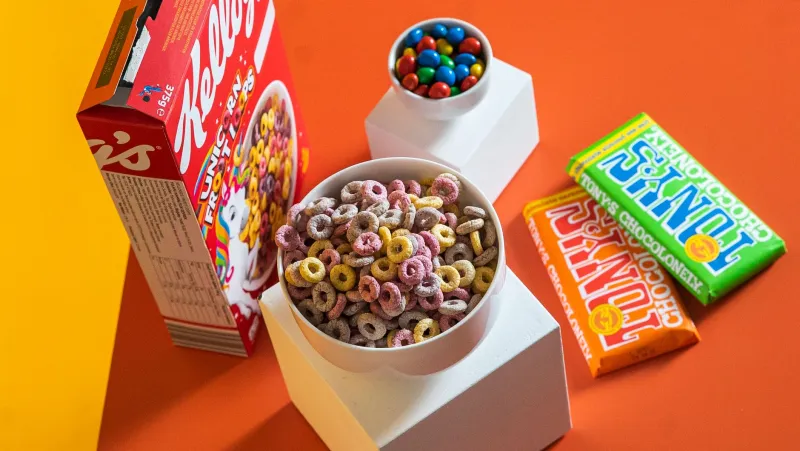
Somewhere right now, a fully employed adult with a mortgage and a Roth IRA is refreshing an eBay listing for a 1997 Reptar Crunch cereal box. They are not doing this ironically. They are doing this with the focused intensity of a day trader watching pre-market futures. They will spend $340 on it without blinking, and they will feel absolutely zero regret.
Welcome to the world of vintage cereal box collecting — the hobby nobody saw coming, but that, in hindsight, makes complete and total sense.
Saturday Morning Was the Original Prime Time
Here's the thing about kids who grew up in the '90s and early 2000s: Saturday mornings were sacred. You woke up before your parents, poured yourself a bowl of something aggressively colorful, planted yourself six inches from the TV, and absorbed four straight hours of cartoons. The cereal box wasn't just packaging — it was part of the ritual. It had games on the back, prize inserts inside, and characters that felt like your actual friends.
Now those kids are adults with disposable income and a powerful, almost dangerous amount of nostalgia. And the cereal companies? They stopped making half those products. Which means the boxes that survive are, by the cold logic of supply and demand, worth actual money.
"It's not just about the cereal," explains Marcus Delray, a collector based in Columbus, Ohio, who has amassed over 200 vintage boxes in the past four years. "It's about a specific feeling. When I found a sealed box of Oreo O's from 2001, I literally got emotional. That box represents a Saturday morning I'll never get back. And that's worth something to me."
It is worth something, Marcus. Specifically, a sealed box of original Oreo O's — discontinued in the U.S. in 2007 — can fetch anywhere from $200 to $500 depending on condition. An unopened box of Waffle Crisp has sold for over $150. And don't even get started on anything that came with a limited-edition toy or a movie tie-in. That Jurassic Park cereal box? Consider your savings account warned.
The eBay Breakfast Rush Is Very Real
A quick scroll through eBay's cereal box category is enough to make you question every life decision that led to you not hoarding grocery packaging in 1998. Listings regularly pop up in the triple digits. Rare promotional boxes — think anything tied to a major film release, a sports championship, or a beloved-but-cancelled cartoon — can command prices that would make your financial advisor pour one out.
Reseller Janelle Kim, who operates out of Portland and specializes in what she calls "edible nostalgia artifacts," started flipping vintage boxes as a side hustle two years ago. She now pulls in a consistent monthly income from it.
"People think it's weird until I show them the numbers," she says. "A complete, box-only collection of the original Pokémon cereal with all four box variants? I moved that for $800. The right buyer is always out there. You just have to know what you have."
What you have, it turns out, is cultural currency. The more a cereal leaned into pop culture — licensing characters, running sweepstakes, printing collectible cards on the back — the more valuable that box becomes decades later. Condition matters enormously. An unopened box with no creasing, no fading, and no water damage is the holy grail. A flattened, sticker-damaged box is still interesting, but it's not retirement money.
The Cereal Historians Are Here (Yes, Really)
If you think this whole thing sounds a little niche, allow us to introduce you to the growing community of cereal historians — enthusiasts who treat breakfast food marketing with the same academic rigor you'd apply to Renaissance art or Cold War propaganda.
Online forums, Discord servers, and dedicated Instagram accounts have sprung up around documenting, cataloguing, and discussing the history of American cereal packaging. These aren't casual fans. These are people who can tell you which year Trix changed its rabbit's eye color, what font General Mills used on the 1994 Honey Nut Cheerios box, and exactly how many different Cap'n Crunch promotional variants existed between 1988 and 2003.
"Cereal boxes are genuinely fascinating as cultural artifacts," argues Dr. Priya Nolan, a media studies lecturer who has written about food packaging as advertising history. "They were designed by some of the most talented commercial artists of their time, they reflect the anxieties and aspirations of each era, and they were in millions of American homes every single morning. That's a profound cultural footprint that we're only just starting to appreciate."
She pauses, then adds: "Also, the Honey Smacks frog was objectively a top-tier mascot and I will die on that hill."
Which Boxes Are Actually Worth Your Rent?
Since you're now definitely going to raid your parents' attic this weekend, here's a quick breakdown of the boxes that collectors are currently losing their minds over:
Oreo O's (pre-2007 U.S. version): Sealed boxes are unicorns. Even open boxes with the bag still inside can pull $80–$120.
Pokémon Cereal (1999–2000): Especially valuable with the original Poké Ball marshmallow insert included. Full four-box sets are the dream.
Urkel-Os: Yes, the Family Matters cereal was real. Yes, it is deeply collectible. No, we are not joking.
Nintendo Cereal System (1988): Technically older than the core collector demographic, but so iconic that demand remains sky-high. Two cereals in one box. Absolute madness. Worth a lot.
Waffle Crisp: Discontinued and beloved. A sealed box is the breakfast equivalent of finding a first-edition novel at a garage sale.
Any movie tie-in box from 1993–2002: Batman Forever, Space Jam, Toy Story — if it had a major motion picture on the front, it has a buyer today.
The Flex Is Real, and It's Delicious
Here's what makes cereal box collecting different from, say, sneaker flipping or vintage vinyl hoarding: it has an inherent absurdity that makes it genuinely fun. Nobody is pretending this is a serious investment class (even if some of the returns are legitimately impressive). The whole culture has a self-aware goofiness baked in — pun fully intended.
Collectors post their hauls with the same energy as unboxing videos. Resellers describe their sourcing trips to estate sales and storage auctions like they're on a treasure hunt. And when someone posts a photo of a mint-condition Quisp box or a sealed package of French Toast Crunch (the original recipe), the comments section erupts with the kind of joy typically reserved for major sporting events.
It's nostalgia as a competitive sport, and the prize is a cardboard box that once held sugar-blasted corn puffs.
Is it practical? Absolutely not. Is it a little bit beautiful? Honestly, yes.
Now if you'll excuse us, we have an auction ending in eleven minutes for a 2000 Pokémon cereal box with the prize insert still sealed inside, and we are not going to let it go for under $200 without a fight.
Tony the Tiger would want it this way.