Sneaker Flipping Is the New Stock Market, and Gen Z Is Already Richer Than You
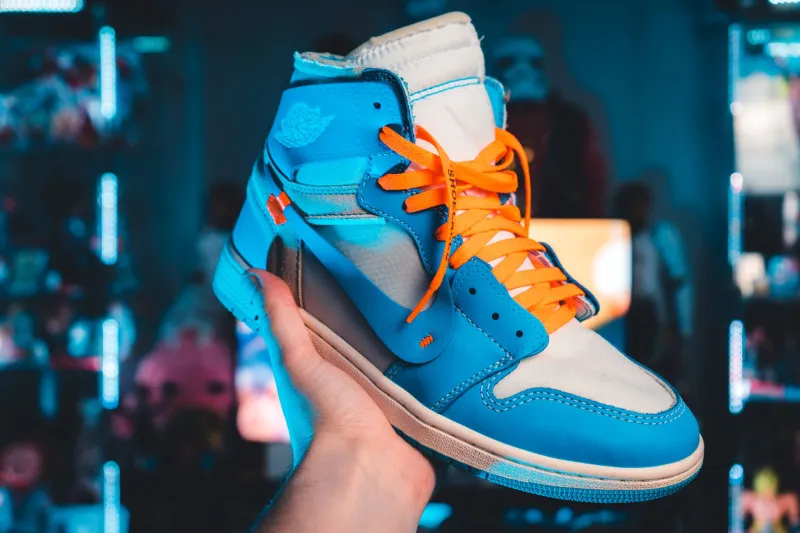
Let's set the scene. It's 6:47 a.m. on a Saturday. You're drooling on your pillow, half-dreaming about a breakfast burrito, completely unbothered by the concept of financial literacy. Meanwhile, a teenager in a hoodie somewhere in Ohio just refreshed the SNKRS app for the forty-third time, copped a pair of Nike Air Jordan 4 Retro "Bred Reimagined" sneakers at retail, and listed them on StockX before you even hit snooze.
By 9 a.m., he's $400 richer. You're still looking for your phone charger.
Welcome to the sneaker resale economy — a multi-billion-dollar underground (well, not so underground anymore) marketplace where limited-edition kicks are treated less like footwear and more like volatile assets. And Gen Z didn't just stumble into this hustle. They built it.
Shoes as Securities: The Weird New Reality
Here's the thing nobody told you when you were young: sneakers have always been a flex. But somewhere between the Air Jordan 1 dropping in 1985 and the current era of algorithmically engineered scarcity, "flex" quietly transformed into investment strategy.
Today, the global sneaker resale market is worth somewhere north of $6 billion, with projections pushing past $30 billion by the end of the decade. That's not pocket change. That's a legitimate economy — one that operates with its own version of supply chains, market speculation, and even insider trading (more on that in a second).
Platforms like StockX, GOAT, and Bump have essentially become the NYSE for Nikes. Prices fluctuate in real time. Sellers track "deadstock" value like day traders watching tickers. There are sneaker indexes. There are price charts. If your uncle had put his retirement savings into a pair of Yeezys in 2015 instead of that timeshare in Branson, Missouri, he'd be doing a lot better right now.
The Drop Culture Machine
The whole system runs on artificial scarcity, and brands have perfected it into an art form. Nike, Adidas, New Balance — they release limited quantities of hyped colorways, often with zero warning, through apps and raffles that feel less like a shopping experience and more like a lottery with better branding.
This is called a "drop," and if you've never experienced the anxiety of waiting for one, congratulations on having a healthy relationship with consumer goods.
Sneakerheads — the devoted community of collectors and flippers — obsess over release calendars the way fantasy football players obsess over injury reports. They follow leakers on Instagram. They join Discord servers where someone's cousin who works at a warehouse might slip an early release date. They set alarms. Multiple alarms. They have bots — yes, automated purchasing bots — that can check out faster than any human thumb ever could.
The kids who have mastered this system aren't just buying shoes. They're running small businesses.
The Math That Will Make You Feel Behind
Let's talk numbers, because they're genuinely wild.
A pair of Nike Dunk Low Pandas retails for around $110. On the resale market, depending on the timing and colorway variant, they've sold for $250 to $350. That's a 120% to 200% return on investment. Your 401(k) has never looked at you the way those margins look at a 17-year-old entrepreneur.
The real unicorn flips are even more extreme. The Nike Air Yeezy 2 "Red October" — a collaboration between Nike and Kanye West — originally retailed for $245 back in 2014. A decade later, a deadstock pair in the right size sold for over $20,000. That's not a typo. Twenty. Thousand. Dollars. For shoes.
Now, not every flip is a moonshot. Most resellers are working with margins of $50 to $200 per pair, which is still remarkable when you consider that some teenagers are moving ten to fifteen pairs a month. Do the math. That's a part-time job that pays better than most actual part-time jobs and doesn't require a paper hat.
Your Closet Is a Potential ATM (No, Really)
Here's the part where this stops being a story about other people and starts being about you.
Do you own any sneakers from the last decade that you haven't worn in a while? Any limited editions you bought on a whim? Any collaborations collecting dust on a shelf because you thought they looked cool but they never really matched anything you own?
Head over to StockX or GOAT right now. Search your shoe. Check the asking price. Try not to pass out.
Sneaker culture has a long memory, and pairs that seemed unremarkable at the time have quietly appreciated into genuine collector items. Certain New Balance 990s. Various Air Max iterations. Niche Salehe Bembury collaborations that only 800 people seemed to care about at the time — and now 80,000 people want.
The point is: the resale market doesn't care how old you are. It cares about condition, box, and rarity. If you've got the right shoes in the right shape, you've got leverage.
The Dark Side of the Hustle
Of course, no economy this chaotic exists without some shadiness baked in.
Bot culture has made it nearly impossible for regular buyers to cop limited releases at retail. By the time a human being gets to the checkout page, automated systems have already swept inventory clean. It's frustrating, it's a little dystopian, and it's absolutely the reason why that Jordan colorway you wanted is now $400 on the aftermarket.
There's also the counterfeit problem. The fake sneaker industry — centered largely around markets in China — has gotten disturbingly good. "Super fakes" now require professional authentication to identify, which is why platforms like GOAT and StockX employ physical verification teams. Even still, scams happen. Buying from individuals without authentication is a gamble, and some people have lost serious money on shoes that turned out to be very convincing lies.
And then there's the emotional volatility. Hype cools. A celebrity gets canceled. A brand oversaturates a silhouette. Suddenly the shoes you paid $400 for are sitting at $180 and declining. Sneaker flipping rewards the informed and punishes the impulsive — which, honestly, is a pretty good life lesson dressed up in a very expensive shoe.
Should You Get In On This?
Look, we're not here to tell you to quit your job and become a sneaker baron. But we are here to tell you that dismissing this as "kids stuff" is the exact kind of thinking that makes adults miss out on things.
The barrier to entry is low. The learning curve is real but manageable. And the community — for all its bots and hype beasts — is genuinely passionate and surprisingly welcoming to newcomers who put in the research.
Start small. Learn one or two silhouettes. Follow release calendars. Read the StockX market data like it's the news (because in this economy, it basically is).
Or don't. Keep sleeping in on Saturdays.
Just know that somewhere in Ohio, that kid in the hoodie just copped another pair.