Sixteen Dollars for Nothing: How Bars Convinced You Sobriety Is a Premium Experience
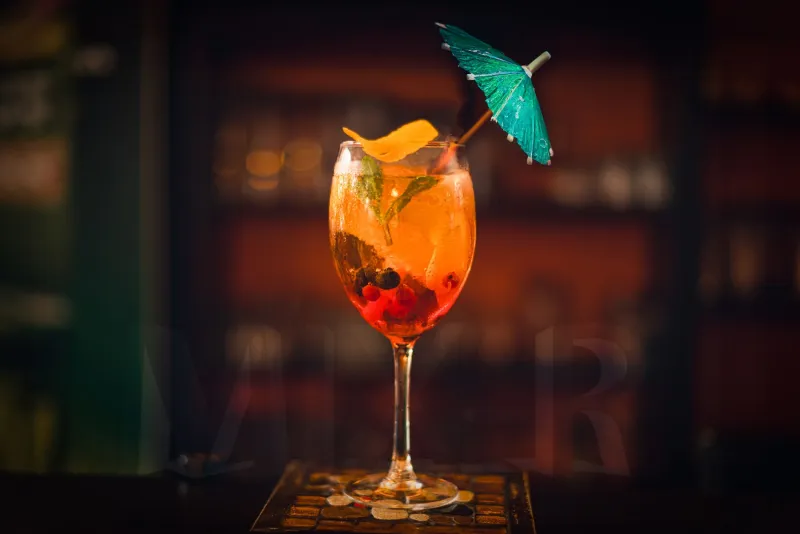
Picture this: you're at a trendy bar in a neighborhood that recently gentrified. The menu is printed on thick cardstock with a sans-serif font that communicates we are serious about beverages. You scan the cocktail list — $14, $16, $18 — and then your eye drifts to the non-alcoholic section. You see a "Botanical Spritz" for $15. You are intrigued. You order it.
It arrives in a coupe glass with a dehydrated citrus wheel and a sprig of something that might be thyme. It tastes like a very confident sparkling water that went to grad school. You drink it in four minutes.
You have just paid $15 for the concept of a cocktail.
The Rise of the Sober-Curious Industrial Complex
The "sober curious" movement — a phrase coined by author Ruby Warrington in 2018 — started as a genuinely interesting cultural shift. People, particularly younger Americans, began questioning their relationship with alcohol not out of addiction necessity but out of wellness curiosity. What if I just... didn't? What would that feel like? It was low-stakes, exploratory, and frankly kind of healthy.
Then marketing got hold of it.
Within about two years, "sober curious" transformed from a personal wellness experiment into a full lifestyle vertical with its own product ecosystem, influencer tier, and — crucially — its own bar menu pricing structure. Non-drinking was no longer simply the absence of a choice. It was rebranded as a superior choice. A mindful choice. A choice that deserved its own premium, artisanal, small-batch product category.
The bars were watching. The bars were delighted.
Let's Talk About the Math
Here is the fundamental economics of a traditional cocktail: you have a spirit (cost to bar: maybe $1.50 to $3 per pour), a mixer or two, some ice, a garnish, and labor. The bar marks it up to $14 and makes a healthy margin. This is reasonable. Alcohol is the value proposition. The experience, the ambiance, and the bartender's technique justify the rest.
Now here is the economics of a non-alcoholic cocktail: you have some combination of juice, shrub, sparkling water, a syrup, possibly a fancy non-alcoholic spirit that costs the bar maybe $0.80 per serving, some ice, and a garnish. The bar charges $13 to $16.
The alcohol was the expensive part. You removed the expensive part. The price went up.
This is not a typo. This is a business model.
At a growing number of upscale bars and restaurants across New York, LA, Chicago, and every other city with a neighborhood called "The District" or "The Quarter," NA cocktails are priced at 80 to 95 percent of their boozy counterparts. Some establishments charge more for the non-alcoholic version, citing the cost of premium NA spirits — brands like Seedlip, Ghia, or Lyre's, which retail for $30 to $45 a bottle and are used in approximately one-tablespoon quantities per drink.
The Premium NA Spirit Hustle
Seedlip, widely credited with launching the premium non-alcoholic spirits category when it debuted in 2015, sells distilled non-alcoholic "spirits" for around $35 to $40 a bottle. They are, to be fair, interesting products — complex, botanical, genuinely crafted. The founder, Ben Branson, distilled them in his farmhouse and sold them to Selfridges in London, which is objectively a great story.
The category has since exploded. There are now non-alcoholic whiskeys, gins, rums, and wines at every price point. Athletic Brewing makes non-alcoholic craft beer that costs about as much as regular craft beer. Surely makes a non-alcoholic rosé that retails for $18 a bottle — roughly the same as an actual bottle of decent rosé, minus the thing that makes rosé rosé.
The pitch is always the same: the craft, the complexity, the ritual — all the things people love about drinking, minus the alcohol. Which is a compelling pitch! But it's also a masterful reframing of "water with herbs in it" as a luxury commodity.
Sobriety as Status Symbol
What the marketing apparatus understood — and this is genuinely clever — is that in certain social environments, not drinking was starting to carry a subtle stigma. You'd decline a drink and someone would ask if you were okay, or pregnant, or "doing a thing." The social script around alcohol was so baked in that opting out felt like an explanation was required.
Premium NA products solved this by making sobriety visible and aspirational. If you're drinking something that comes in a beautiful bottle, arrives in a coupe glass, and costs $15, nobody's asking if you're okay. You're clearly doing a thing, and the thing looks expensive and intentional, which in 2024 American social culture reads as: this person has their life together.
The $15 NA cocktail isn't really a drink. It's a social prop. It's the price of not having to explain yourself.
And honestly? That's a market. That's a real, human, understandable market. The execution is just very, very funny.
The Menu Language Is Doing All the Work
Spend ten minutes reading NA cocktail menus and you'll notice the descriptions are working overtime to justify the price point. Regular cocktails get two to three descriptors: "bourbon, honey, lemon." Non-alcoholic cocktails get a small essay.
"A grounding blend of adaptogenic mushroom tincture, house-made cardamom shrub, cold-pressed ginger, and Seedlip Spice 94, finished with a smoked rosemary sprig and served over a single large ice cube."
Every word in that sentence is doing financial heavy lifting. "Adaptogenic" means it costs more. "House-made" means it costs more. "Cold-pressed" means it costs more. "Single large ice cube" means someone spent $400 on a Wintersmiths ice press, which also costs more.
You are paying for the narrative. The drink is secondary.
The Designated Driver Tax
There's a less glamorous version of this conversation happening simultaneously, and it deserves acknowledgment: for people who genuinely don't drink — whether for health, recovery, religion, pregnancy, or simple preference — the NA cocktail pricing structure is a quiet little insult.
For decades, not drinking at a bar meant you were paying $4 for a Coke and watching everyone else have an experience. The premium NA movement fixed the experience problem but created a new one: now you're paying $14 for a Coke that has been alchemized into a "botanical experience." The person in recovery, the pregnant woman, the person who just doesn't like alcohol — they're now paying near-cocktail prices as the baseline expectation.
The "sober tax" got replaced with the "sober premium," and it's somehow worse.
What You're Actually Buying
Strip away the coupe glass and the dehydrated citrus wheel and the menu copy and what you have is this: a bar figured out that a segment of its customer base would pay cocktail prices for non-cocktails if the packaging was right, and the bar was correct.
This is not a criticism of not drinking. Not drinking is fine. Great, even. This is a gentle, affectionate roast of the economic infrastructure that grew up around it — the one that looked at human beings wanting to be healthy and present and said, wonderful, how do we monetize that?
Somewhere right now, a bartender is carefully placing a sprig of thyme into a $16 glass of sparkling water and calling it craft.
And someone is photographing it for Instagram and calling it freedom.
Both things are true. The bar has already run your card.