Going Broke at a Glacial Pace: The Luxury of Pretending You've Opted Out
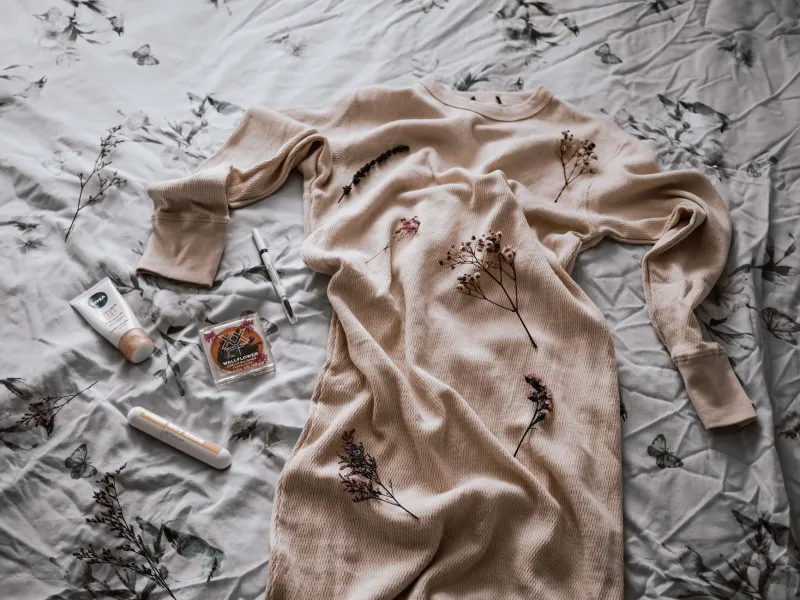
The aesthetic is immaculate. Soft morning light filters through undyed linen curtains. A ceramic mug — handthrown, slightly imperfect, $68 from an Etsy shop in Vermont — sits next to a worn paperback and a small wooden toy that belongs to no child in particular. There's a sourdough loaf cooling on a reclaimed oak board. Someone, somewhere, is breathing intentionally.
This is "slow living." And it will cost you approximately the same as a lease on a mid-size sedan.
The Rebrand of Burnout
Let's be honest about what happened here. Somewhere around 2021, a critical mass of people — mostly millennials and older Gen Z — hit a wall. The hustle culture gospel had been preached for a decade straight: rise and grind, monetize your passion, sleep when you're dead. And then a lot of people looked around and realized they were exhausted, broke, and still somehow not successful enough to justify any of it.
This was a genuine crisis. It was also, almost immediately, a market opportunity.
Wellness influencers, lifestyle brands, and a small army of aesthetic-forward Instagram accounts spotted the vacuum and filled it with something beautiful: the idea that opting out of capitalism's demands was not only possible but purchasable. Burnout got a rebrand. It became "intentional living." Exhaustion became "rest as resistance." And the antidote to spending too much money chasing success was, naturally, spending a different kind of money on a different kind of stuff.
The stuff just had to be beige, slightly rough to the touch, and made by someone named Astrid.
The Price Tag on Simplicity
Let's do some window shopping in the slow living economy, because the numbers are genuinely something.
Linen bedding — the cornerstone of the aesthetic, the thing that says I have transcended thread count — runs anywhere from $180 to $450 for a sheet set. Not Egyptian cotton. Not some luxury hotel situation. Linen. The fabric that looks like you slept in a burlap sack, which is apparently the point.
Handmade ceramic tableware: $35 to $80 per piece. Per. Piece. A full set of four dinner plates from a small-batch ceramicist could run you $300 before you've bought a fork.
Minimalist wooden toys, the kind that signal your child's environment is curated and screen-free: $40 to $120 for what is, fundamentally, a small painted block of wood. A set of Grimm's rainbow stacking pieces — a beloved slow-living nursery staple — retails for around $100. The same developmental outcome can be achieved with a cardboard box, but that doesn't photograph as well.
And the candles. Lord, the candles. A single soy candle with a name like "Nordic Dusk" or "Undisturbed" or just the word "Stone" will set you back $35 to $60, burn for 40 hours, and smell like what you imagine a Swedish forest smells like, though you have never been to Sweden and probably never will because you spent all your money on candles.
The Influencer Pipeline
The machinery behind slow living is sophisticated and worth understanding. The aesthetic spreads primarily through a specific type of content: quiet, muted-palette videos of people doing mundane things very slowly. Folding laundry. Pouring tea. Walking through a farmers market in a $280 linen jumpsuit. The audio is usually soft piano or lo-fi beats. The caption says something like choosing presence over productivity or a slow morning is a radical act.
This content performs extraordinarily well because it is aspirational in a new direction. Where old aspirational content showed you things you couldn't have — the yacht, the penthouse — slow living content shows you things that feel achievable. A nicer mug. A cleaner kitchen. More stillness. It feels attainable because it's dressed up in simplicity.
What it's actually selling you is a curated visual identity that requires continuous, expensive maintenance to sustain. The creator showing you their "simple" morning routine has a ring light, a camera setup, a carefully styled kitchen that took two hours to arrange, and a brand deal with the linen company. Their simplicity is a full-time job.
The Irony Is Doing Heavy Lifting
Here's where it gets philosophically rich enough to serve at a dinner party on your handthrown ceramics: the entire premise of slow living is anti-consumerist. The rhetoric is explicitly about stepping back from the treadmill of acquiring things, about finding meaning in less, about rejecting the noise of a market economy that sells you solutions to problems it created.
And yet the vehicle for this philosophy is a product category. A very expensive product category.
The markup on "intentional living" goods is extraordinary. A plain white ceramic mug from Target costs $4. A plain white ceramic mug from a slow-living brand with a name like "Vessel" or "Ground" costs $44 and comes wrapped in recycled tissue paper with a card that says made with care. The difference is not the mug. The difference is the story, the aesthetic alignment, the signal it sends to anyone who comes over for coffee: I have thought carefully about my choices. I am not like the others.
You are paying a $40 premium for the right to feel like a person who doesn't care about premiums.
Who Actually Lives Like This
The cruel joke at the center of the slow living economy is that genuine slow living — actual simplicity, actual rest, actual disconnection from the grind — is only accessible to people with money. A trust fund and a remote inheritance in Vermont can sustain a truly simple life. A $55,000 salary in a major American city cannot sustain $400 sheet sets and a ceramics collection and a weekly farmers market habit, at least not without some very creative accounting.
The people buying into the aesthetic on a budget are, in the most ironic twist imaginable, working harder and spending more to look like they're doing less. They're stressed about buying things that are supposed to reduce stress. They're hustling to afford the visual language of someone who has stopped hustling.
It's exhausting. It's also, from a branding perspective, absolutely genius.
The Off-Ramp
If you genuinely want a slower, quieter life — and there's nothing wrong with wanting that, it's a completely reasonable human desire — here's the uncomfortable truth: it doesn't require a single purchase. You can sit quietly with a $3 gas station coffee in a ceramic mug you've had since college. You can go for a walk without linen pants. You can opt out of the noise without buying your way into a more expensive version of it.
The slow living aesthetic is beautiful. The slow living industry is a hustle wearing a linen mask.
And somewhere, an influencer is filming themselves doing nothing, very expensively, and calling it peace.