You're Paying $300 a Month for Apps You Haven't Opened Since the Obama Administration
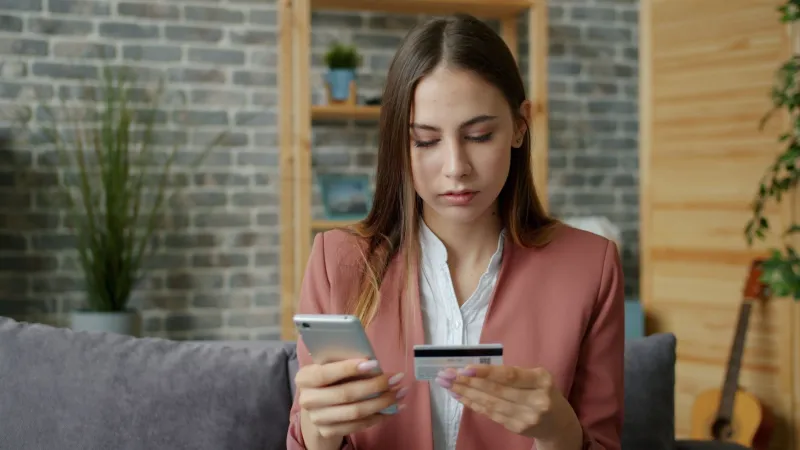
There is a specific type of financial horror that arrives not in one dramatic moment, but slowly, $9.99 at a time, on the fourteenth of every month, forever. It doesn't announce itself. It doesn't send a warning. It just quietly debits your account while you're busy living your life, confident that you will not notice, and statistically correct about that assumption.
This is subscription creep. And if you haven't audited your recurring charges recently, there is a genuinely alarming probability that you are currently funding a small digital empire of services you have not touched since a different presidential administration.
Let's talk about it.
How We Got Here: The Seduction of the Free Trial
It always starts the same way. You're reading an article — maybe about productivity, maybe about learning Spanish, maybe about meditating your way to a calmer existence — and there's a button. Try free for 30 days. No commitment. Cancel anytime. Just your email and a credit card number, which is definitely not a commitment, technically.
You sign up. You use the app enthusiastically for four days. Life intervenes. The app sits on your phone, its little icon a monument to good intentions. Day 30 arrives. You do not cancel. The charge hits. You don't notice because it's $6.99 and you spent $74 at Chipotle last week without blinking.
Multiply this by every moment of optimism you've had in the last five years and you have your current monthly subscription bill.
The free trial model is not generosity — it's behavioral science. Companies know that the cancellation friction (finding the settings, navigating the 'are you sure?' screens, resisting the 'pause instead of cancel' offer) is enough to retain a significant percentage of users who have zero intention of continuing. They're not banking on your loyalty. They're banking on your inertia.
The Average American's Subscription Autopsy
Surveys consistently find that Americans dramatically underestimate how much they spend on subscriptions. People guess somewhere in the $80-100 range per month. The actual average, when all recurring digital charges are tallied — streaming, music, cloud storage, fitness, news, apps, premium tiers of free services — lands considerably higher. Some estimates push past $300 for households with multiple streaming platforms and a few 'just in case' memberships in the mix.
The categories where money goes to die are remarkably consistent:
Streaming platforms are the obvious offender. The average American household now subscribes to four or more streaming services, which sounds reasonable until you realize that three of them exist because of one specific show that you finished in a weekend and then forgot to cancel. You kept Peacock for The Bear. Wait, no — that's Hulu. You kept Peacock for... you'll figure it out.
Fitness and wellness apps are the quiet killers. Peloton, Calm, Headspace, MyFitnessPal Premium, Noom, various yoga platforms — these subscriptions are purchased during moments of genuine motivation and maintained through months of complete inactivity by the psychological belief that canceling means giving up. As long as you're paying, technically you're still someone who meditates. Canceling makes it official. Nobody wants to make it official.
Cloud storage is the sneakiest one. You hit your free storage limit in 2018, upgraded to the next tier for $2.99/month, and have not thought about it since. You are storing approximately 4,000 blurry photos of food and 200 screenshots of memes you never looked at again. The cloud is just a very expensive drawer.
News subscriptions deserve special mention because they were signed up for during a period of heightened civic engagement and are now being maintained by the guilt of feeling like you should read quality journalism, even if your actual media diet is primarily Twitter and whatever your group chat sends you.
The Psychology of 'Just in Case'
The most honest explanation for why we maintain unused subscriptions isn't laziness — it's a specific cognitive quirk called loss aversion dressed up in optimistic clothing.
Canceling a subscription feels like losing access to something. Even if you haven't used it in six months, the option to use it has value. Duolingo Plus is sitting there, ready for the day you decide to finally learn Portuguese. The Audible credits are accumulating for the moment you rediscover your love of audiobooks. The Adobe Creative Cloud subscription is for the graphic design hobby you're definitely going to pick back up.
You're not paying for the service. You're paying for the version of yourself that uses the service. And that version of yourself, optimistic and productive and learning Portuguese, is worth $14.99/month to protect.
This is not a criticism. This is an extremely human thing to do. It's also quietly bankrupting you.
The Subscription Audit: A Journey Into Darkness
Financial advisors and personal finance influencers love to recommend the subscription audit — the practice of going through your bank and credit card statements line by line and identifying every recurring charge. It sounds simple. It is not simple. It is, in fact, a deeply uncomfortable confrontation with your past self's optimism.
People who have done thorough subscription audits report finding charges for: gym memberships at gyms they no longer live near, premium accounts for apps they deleted, services that changed their name and are now unrecognizable in the statement, and — the most haunting category — subscriptions for things they genuinely cannot remember signing up for.
The recommended approach is to cancel everything non-essential and then deliberately re-subscribe to the things you actually miss after 30 days. In practice, most people cancel two things, feel very proud of themselves, and stop.
What You're Actually Getting for $300 a Month
Let's do the math with some generosity. If you're spending $300 monthly on subscriptions and actively using half of them — which is optimistic — you're paying $150/month for services you genuinely value. The other $150 is the tax you're paying on good intentions.
That's $1,800 a year. For nothing. For digital ghost towns with your name on the welcome screen.
For $1,800, you could take a real vacation. You could furnish a room. You could, ironically, pay for one truly excellent subscription — the kind of premium service that you actually use every day and that genuinely improves your life — for twelve straight years.
Or you could keep the Calm app and the three streaming platforms and the cloud storage full of food photos.
We're not here to judge. We're just here to make sure you're doing it with your eyes open.
Now if you'll excuse us, we have to go cancel something.