Silence Is Golden (And Apparently Costs $300 a Night): The Booming Business of Doing Absolutely Nothing
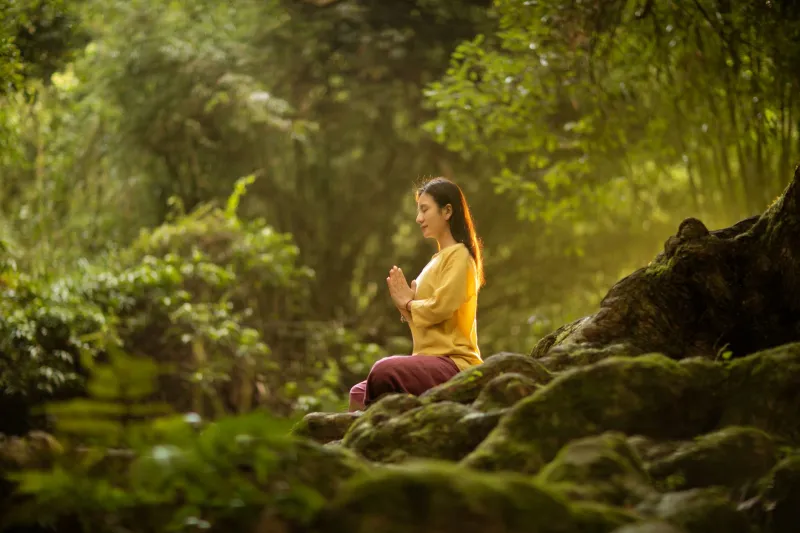
Somewhere in the mountains of Vermont, a hedge fund manager is sitting cross-legged on a hemp mat, paying $1,800 to not talk to anyone for a week. The juice is organic, the silence is mandatory, and the Instagram content is absolutely immaculate. Welcome to the luxury meditation retreat — where inner peace has a very aggressive price tag and the waitlist is longer than your therapy backlog.
The wellness retreat industry in the United States is now worth somewhere north of $180 billion, and the fastest-growing segment isn't hot yoga or green smoothie subscriptions. It's silence. Actual, paid-for, heavily curated silence. And people cannot get enough of it.
The Anatomy of a $2,000 Weekend of Nothing
Let's walk through what your money actually buys at one of these places, because the itemized receipt is something.
You arrive at a converted farmhouse that smells aggressively of cedar and intention. A smiling staff member — who, importantly, is allowed to speak — takes your phone. Not in a creepy way. In a healing way. You receive a linen tote bag containing a journal, a pen made from recycled wood, and a small card that says something like "You are already whole." That card probably costs $4 to produce. Your room, which is beautiful in the way that only rooms without TVs can be, overlooks a meadow. There is a single artisanal candle. There is no Wi-Fi password because there is no Wi-Fi.
Breakfast is a "mindful eating experience," which means you chew your oatmeal seventeen times per bite while a gong rings softly in the background. Lunch involves something with miso. Dinner is when the real magic happens: a bowl of lentils so lovingly prepared that you will briefly forget you are paying $300 a day to eat lentils.
In between meals, you meditate. You do breathwork. You go on a "silent nature walk," which is just a hike where nobody talks, but somehow costs more than a regular hike because of the intentionality.
The Influencer Paradox That Nobody Wants to Acknowledge
Here is where things get genuinely, deliciously absurd. The entire premise of a digital detox retreat is that you abandon technology, silence your notifications, and reconnect with your analog self. Noble! Necessary, even, in our screen-saturated world.
And yet.
Scroll Instagram for thirty seconds and you will find approximately ten thousand posts documenting someone's digital detox in loving, high-resolution detail. There's the pre-retreat flat lay: linen clothing, a dog-eared copy of The Power of Now, a passport-sized journal, and a matcha latte — all arranged on a raw wood surface. There's the blurry, intentionally unfiltered arrival photo captioned "leaving my phone behind for 5 days 🌿 see you on the other side." And then, roughly 120 hours later, the triumphant return post: a glowing selfie with the caption "I am a completely different person. I cried twice. I have never felt more present. Link in bio for the retreat I stayed at (gifted)."
The retreat, by the way, now has a three-month waitlist.
The irony isn't lost on the retreat industry itself. Many of these places have dedicated "content windows" — short, scheduled periods where phones are permitted specifically so guests can document their phoneless experience. It's a loophole so wide you could drive a sponsored Sprinter van through it.
Who Is Actually Going to These Things?
The demographic breakdown of luxury retreat attendees is, predictably, a little on the nose. We're talking mostly high-earning professionals between 30 and 55 who work jobs so relentlessly overstimulating that paying someone to take their phone away is genuinely the only way they'll actually put it down. Tech executives. Finance bros in recovery. Creative directors. The occasional celebrity who releases a statement about it afterward.
There's also a growing contingent of people who go not necessarily because they need the silence, but because the retreat itself has become a status signal. Saying "I just got back from a silent retreat in Ojai" carries a very specific social currency in 2025. It says: I am stressed in an interesting way. I have disposable income but I'm not materialistic about it. I am working on myself, which is different from just buying things, even though I did technically buy this.
It's the wellness equivalent of conspicuous non-consumption. You're not flaunting what you bought — you're flaunting what you gave up. For a weekend. For $1,800.
Is Any of It Actually Working?
Here's the thing that complicates the easy satire: some of it genuinely does work. Research on mindfulness, meditation, and even short periods of digital disconnection consistently shows real benefits — reduced cortisol, improved focus, better emotional regulation. The science is not the problem.
The problem is that most of these benefits are available for free, or close to it. A public park exists. A library is quiet. A long walk without AirPods costs nothing. Meditation apps, for all their gamified absurdity, charge $13 a month and have guided sessions led by people with very soothing voices.
But here's what a $300-a-night retreat does that a park bench cannot: it creates commitment. When you've spent real money — money that stings a little — you actually show up. You actually sit still. You actually eat the lentils without checking your email, because you physically cannot check your email and also you didn't spend two grand to blow it by sneaking your phone in your yoga pants.
So maybe the price tag is the point. Maybe the outrageousness of the cost is what finally forces chronically online, perpetually distracted Americans to sit still for five minutes.
Or maybe we've just invented a very expensive way to do what tired people have always needed to do: stop.
Either way, the hemp mat is already booked through December. The lentils are simmering. And somewhere, someone is composing a very heartfelt Instagram caption about how they've finally learned to be present.
They'll post it the second they get their phone back.