Doilies Are Having a Moment and Your Wallet Is About to Feel It
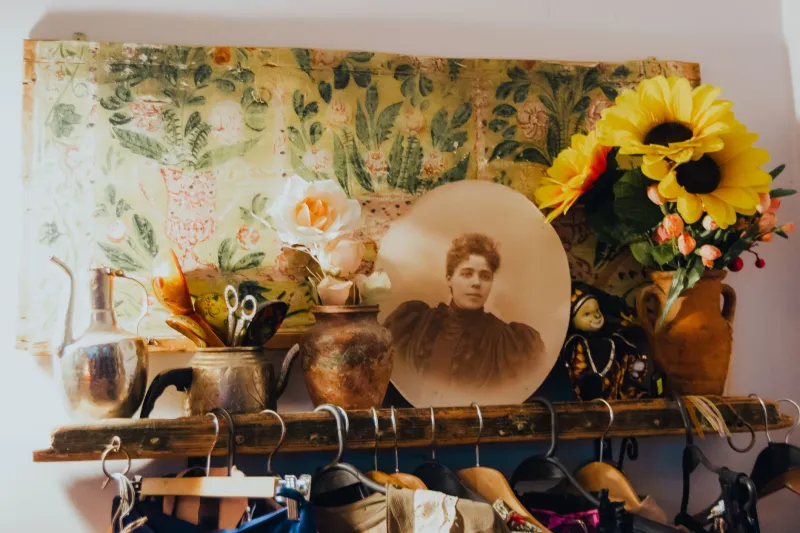
Somewhere between the death of cottagecore and the birth of whatever comes next, Gen Z discovered grandma's house — and they want everything in it. The floral wallpaper. The apothecary jars. The lace tablecloths. The ceramic cat figurines that watched you with glassy, judgmental eyes every time you visited as a child. And just like that, estate sale prices went absolutely feral, antique dealers started posting TikToks, and your grandmother's basement became the hottest real estate in the vintage market.
Welcome to grandmacore. Population: growing. Average age: surprisingly young. Average budget: being tested.
Cottagecore Is Survived by Its Weirder Sibling
For the uninitiated, a brief genealogy. Cottagecore was the pandemic-era aesthetic that swept through Instagram and Pinterest around 2020-2021: linen dresses, wildflower bouquets, sourdough starter (may it rest in peace), and the general vibe of a Jane Austen character who also had a Spotify playlist. It was soft, it was pastoral, it was extremely popular with people who lived in cities and had never actually touched a goat.
But aesthetics, like hemlines and political opinions, cycle. Cottagecore's pastoral minimalism eventually felt a little... clean. A little too curated. Enter grandmacore — or "grandmillennial" style, depending on which corner of the internet you're occupying — which takes the nostalgic impulse of cottagecore and dials it up to eleven. More clutter. More pattern. More stuff. The goal isn't a tidy cottage in the English countryside. The goal is the living room of a woman named Loretta who collected teapots and was not sorry about it.
The aesthetic celebrates maximalism in the most specific possible way: not the chaotic maximalism of, say, a teenager's bedroom, but the curated accumulation of a life well-lived. Floral patterns on top of floral patterns. Mismatched china displayed in a glass cabinet. A crocheted blanket on every horizontal surface. Framed needlepoint that says something like "Bless This Mess" hanging next to a portrait of someone else's ancestor.
It's chaotic. It's cozy. And it is, increasingly, expensive.
The Estate Sale Gold Rush
Here's where the economics get interesting, and by interesting we mean "slightly painful if you were planning to furnish an apartment on a budget."
For decades, estate sales were a fairly low-key affair. You'd show up on a Saturday morning, shuffle through a stranger's possessions, maybe score a nice lamp or a box of old records for $8. The regulars were mostly antique dealers, retirees with specific collecting interests, and the occasional bargain hunter. The vibe was gentle. The prices reflected a market that hadn't yet discovered that a crocheted doily could be aspirational.
Then the aesthetic internet arrived, and everything changed.
Estate sale companies across the country are reporting that younger buyers — specifically millennials and Gen Z shoppers who found the scene through TikTok and Pinterest — have fundamentally altered the market. Items that once sold for a few dollars are now tagged in the dozens. Apothecary jars, once the exclusive domain of people who actually used apothecaries, now move fast and command real money. Vintage floral tablecloths? Gone before lunch. Depression-era glass in dusty rose or sage green? People are setting alarms.
The irony, of course, is exquisite. These are objects that were, within living memory, donated to Goodwill without a second thought. The grandchildren of the women who owned this stuff are now paying estate sale markup to get it back.
The Influencer Economy of Dead People's Stuff
No aesthetic in 2025 exists without its influencer ecosystem, and grandmacore is no exception. A thriving community of content creators has built substantial followings around thrifting, estate sale hunting, and the transformation of vintage finds into Pinterest-worthy interiors.
The format is consistent and deeply satisfying: a creator walks through an estate sale, narrating finds in a hushed, reverent tone. "Oh my gosh, look at this pressed glass candy dish — I'm shaking." Cut to: the dish, cleaned and styled on a marble surface with some dried flowers, available in her Etsy shop for $45 plus shipping. The original price sticker, if shown at all, is usually in the single digits.
This is not a criticism, exactly. Sourcing, cleaning, photographing, and selling vintage items is actual labor. But it has created a secondary effect: it's made everyone aware that this stuff has value, which means the prices at the source — the estate sales, the thrift stores, the flea markets — have climbed accordingly. The floor has risen. The casual browser who just wants a cute jar to put cotton balls in is now competing with resellers who've done their research.
Boutique shops specializing in "curated vintage" have proliferated in every mid-sized American city, offering the grandmacore aesthetic pre-assembled for buyers who don't have time to hunt. A single vintage apothecary jar: $28. A set of mismatched floral china: $140. A framed piece of needlepoint with a mildly passive-aggressive sentiment: $55. The markup over estate sale prices is significant. The markup over what these items were worth five years ago is staggering.
What Are We Actually Buying?
The deeper question — the one that grandmacore raises without quite answering — is what we're really after when we fill our apartments with other people's grandmothers' things.
Nostalgia is the obvious answer, but it's more specific than that. For millennials who grew up visiting grandparents' houses full of exactly this kind of accumulated domestic history, the aesthetic triggers something warm and specific. It's comfort as interior design. It's the visual language of being taken care of, of someone having baked something, of a house that had been lived in long enough to develop a personality.
For Gen Z, who are young enough that they didn't necessarily grow up with those same houses, it's something slightly different — a nostalgia for a time they didn't experience, which is arguably the purest form of it. The grandmacore aesthetic represents permanence, handcraft, and slowness in a world that is none of those things.
Which is lovely, genuinely. The impulse to surround yourself with objects that feel human and particular and old is a reasonable response to an increasingly sterile, algorithmically optimized world.
It's just that the market has noticed. And once the market notices something is meaningful, it charges accordingly.
Grandma Would Have Found This Hilarious
The final irony — and there are many, so we're spoiled for choice — is that the women whose aesthetic is being celebrated and monetized would almost certainly find the whole thing baffling.
The doilies were functional. The apothecary jars held actual things. The mismatched china was mismatched because you used what you had, not because you curated an eclectic collection. The crocheted blankets were made during long winters by someone who needed something to do with her hands.
None of it was a statement. It was just life, accumulated.
But here we are, paying $45 for a candy dish and calling it intentional living. Loretta would have had thoughts. They would have been delivered at the kitchen table, over coffee, in a tone that was warm but not entirely without judgment.
Somehow, that feels right.