Your Cartoon Monkey Is Worth Nothing Now: A Support Group for NFT Survivors
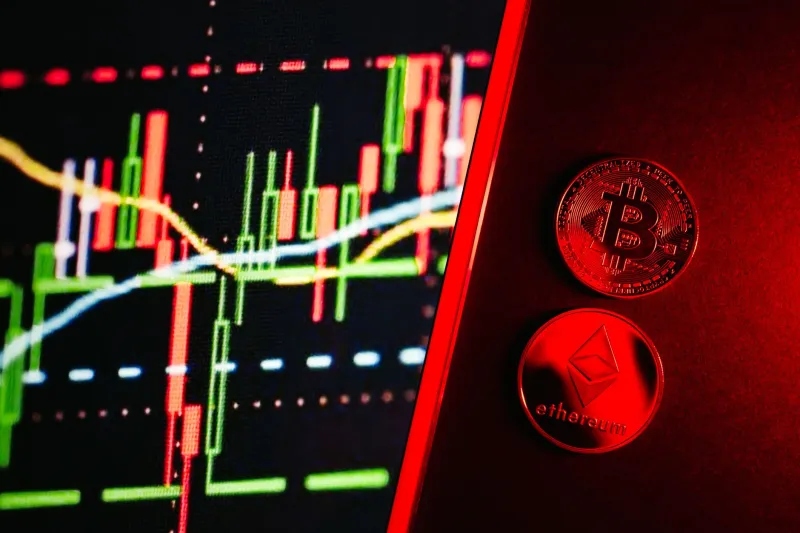
In 2021, people spent the GDP of a small island nation on blurry JPEGs of apes wearing sunglasses. In 2025, those same JPEGs are worth roughly the same as a crumpled gas station receipt. This is the story of the NFT boom, the NFT bust, and the humans caught somewhere in the wreckage — still hodling, still hoping, still explaining what a blockchain is to their relatives at Thanksgiving dinner while everyone else quietly refills their wine.
Welcome to the NFT graveyard. Population: everyone who used the phrase "this is the future of ownership" without a hint of irony.
The Rise: When Monkey JPEGs Were Serious Business
To understand the grief, you have to understand the euphoria. And brother, the euphoria was something.
The Bored Ape Yacht Club launched in April 2021 with 10,000 algorithmically generated cartoon primates, each one distinguished by a unique combination of traits: a particular hat, a certain fur color, maybe some laser eyes for the discerning ape collector. The floor price — the cheapest one you could buy — started around $200. Within a year, that floor had climbed to roughly $400,000. Individual apes with especially rare traits sold for millions.
This was not a niche phenomenon. Celebrities bought in: Justin Bieber, Eminem, Jimmy Fallon, Paris Hilton. Steph Curry changed his Twitter profile picture to his ape. Companies offered ape-themed merchandise. There were talks of movies, TV shows, restaurants. The BAYC team launched a companion project, then a metaverse land sale that crashed the Ethereum network and still generated hundreds of millions of dollars in minutes.
People remortgaged houses. People liquidated retirement accounts. People who had never bought a stock in their lives were suddenly fluent in terms like "gas fees," "floor price," "diamond hands," and the eternally optimistic "WAGMI" — We're All Gonna Make It.
Reader, not everyone made it.
The Crash: When the Music Stopped
By early 2023, the floor price of a Bored Ape had collapsed by over 90%. Not 90% from the peak — 90% gone. An asset that cost $400,000 at its height was now selling, if it was selling at all, for somewhere in the $30,000-$50,000 range. And that was the expensive collection.
Lower-tier NFT projects — the thousands of knockoff monkey collections, pixel art avatars, and "utility-focused" digital assets that launched during the mania — fared considerably worse. A 2023 study found that roughly 95% of NFTs were effectively worthless by the time the hype cycle had fully deflated. Not worth less. Worth nothing. No buyers, no market, no floor. Just a digital file sitting on a blockchain, technically owned by someone who would very much prefer to forget about it.
The causes were multiple and overlapping: rising interest rates sucked speculative capital out of risky assets, celebrity endorsements dried up after several high-profile lawsuits, regulatory scrutiny intensified, and — perhaps most crucially — the cultural moment simply passed. NFTs stopped being cool. And unlike a bad stock, you can't quietly hold a cartoon monkey and wait for the market to recover. You have to display it. It's your profile picture. It's your identity. And when the identity becomes a punchline, the asset follows.
The Survivors: A Field Report From the Wreckage
So what happened to the true believers? The ones who went all-in, who posted long Twitter threads about paradigm shifts and the democratization of art, who had their ape tattooed on their forearm (this happened more than once)?
Some have quietly pivoted. The language of Web3 has softened into vague references to "digital assets" and "blockchain technology" — still technically true, stripped of the embarrassing specifics. LinkedIn profiles have been scrubbed. Discord servers have gone dark.
Some are still in the trenches, which is either admirable or concerning depending on your perspective. There are forums, still active in 2025, where holders discuss "the next cycle" and post charts showing why now is actually a great time to buy. The energy is not dissimilar to a sports fan explaining why this is definitely their team's year. You have to respect the commitment, even if you don't share the optimism.
And some have become the most valuable thing the internet can produce: cautionary tales with good storytelling instincts. Several former NFT whales have built substantial audiences on YouTube and podcasts by doing the most radical thing possible — honestly describing what happened to them. How the FOMO felt. How the community pressure worked. How the charts going up made every concern feel like jealousy, and how the charts going down made every reassurance feel like denial.
The Psychology: Why Smart People Did This
Here is the part where we resist the easy dunk, because the easy dunk is lazy and also slightly dishonest.
The people who bought NFTs were not, by and large, idiots. Many were educated, financially literate adults who had watched cryptocurrency make early adopters rich and concluded, reasonably if incorrectly, that the same logic applied here. The mistake wasn't stupidity — it was a very human susceptibility to social proof, narrative momentum, and the particular madness of watching everyone around you apparently getting rich.
FOMO is a documented psychological phenomenon, not a personality flaw. When the price chart goes up, when celebrities are buying in, when your group chat is posting gains and using words like "inevitable" and "early," the rational part of your brain faces an extremely unfair fight against the part that just doesn't want to be left behind.
The NFT bubble was, in retrospect, a masterclass in how financial manias work — the same mechanics that drove tulip mania in the 1630s, the dot-com bubble in the late '90s, and the housing crisis in 2008. New technology, compelling narrative, social pressure, easy money, and then the slow, grinding realization that the emperor has no clothes. Or in this case, the ape has no pants.
The Lesson (Which Nobody Fully Learned)
If there's a moral here — and there is, though it's not a particularly comfortable one — it's that the question "but what does it actually do?" is always worth asking before you spend $50,000 on something. Not in a killjoy way. In a survival way.
The NFT market isn't entirely dead. There are still legitimate use cases being explored: event ticketing, digital ownership verification, certain gaming applications. The technology isn't worthless. The cartoon monkeys, however, largely are.
Somewhere out there, someone still has their ape as their profile picture. They haven't changed it. Whether that's principled conviction or inability to admit defeat is a question only they can answer.
The blockchain, at least, will remember they owned it. Even if nobody else does.