Congratulations, Your Beige Cashmere Sweater Cost More Than My Rent
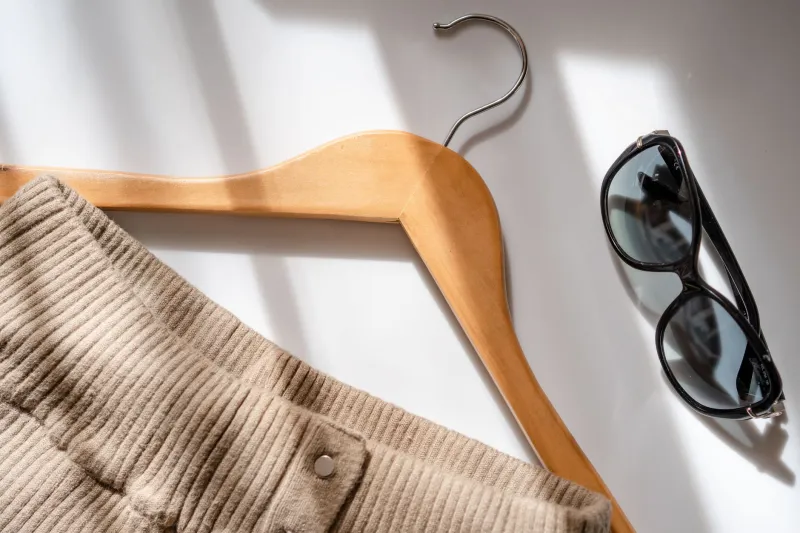
Somewhere between the collapse of logomania and the rise of people who describe their aesthetic as "coastal grandmother," the fashion industry discovered something absolutely diabolical: rich people will pay more money to look like they're not trying. Enter quiet luxury — fashion's most audacious long con, where the less a garment screams, the louder your credit card bill does.
We're talking about $900 trousers that look like they came from a Banana Republic sale rack. A $1,400 crewneck that a middle schooler might describe as "just a gray sweater." Shoes so deliberately plain that your grandfather literally owned a nearly identical pair from Sears in 1987. The whole vibe is "I woke up like this" — except "this" required a personal shopper, a six-month waitlist, and the kind of disposable income that makes economists nervous.
How did we get here? Great question. Let's dig into the beautiful, baffling absurdity of it all.
The Great Rebrand of Boring
For decades, luxury fashion operated on a simple premise: if you spent a lot of money on something, it should look like you spent a lot of money on something. Logos were basically receipts you wore on your body. A Louis Vuitton monogram bag wasn't just a bag — it was a mobile announcement that you had arrived, financially speaking. Flashy was the point.
Then the cultural tide shifted, as cultural tides annoyingly tend to do. Suddenly, flaunting your wealth through visible branding became... gauche. Tacky, even. The truly rich, taste arbiters declared, don't need to advertise. They know. Their friends know. The maître d' at the restaurant where you can't see the prices definitely knows.
And just like that, restraint became the new flex. Brands like Loro Piana, The Row, and Brunello Cucinelli — names that most Americans couldn't pick out of a lineup — became the holy trinity of understated opulence. These are labels that don't do runway spectacles or celebrity campaigns. They just quietly exist, making exquisitely boring things at prices that would make a cardiologist nervous.
The Row, founded by Mary-Kate and Ashley Olsen (yes, those Olsens), sells a plain white T-shirt for $290. A plain. White. T-shirt. For nearly three hundred dollars. The kind of shirt that, if you found it at Target, you'd wonder if it was maybe too basic. But slap a Row tag on it and suddenly it's a statement.
The Paradox That Ate Your Savings Account
Here's where quiet luxury becomes genuinely, philosophically hilarious: the entire premise is built on invisibility. The point is that nobody is supposed to know how much you spent. There's no logo. No monogram. No embossed horse or interlocking letters to signal your investment to the outside world.
So you've spent $2,000 on a cashmere overcoat specifically designed so that strangers cannot tell it costs $2,000.
Let that sink in.
You are paying a premium — sometimes a significant premium over traditional luxury goods — for the privilege of appearing as though you paid nothing remarkable at all. It's the fashion equivalent of hiring a skywriter to spell out "I don't need attention." The contradiction is so complete, so perfectly self-defeating, that you almost have to admire the sheer audacity of everyone involved.
And yet — and this is the truly impressive part — it works. People are absolutely eating it up.
How TikTok Democratized Elitism (Sort Of)
No cultural phenomenon in 2024 exists in a vacuum, and quiet luxury is no exception. The aesthetic exploded into mainstream consciousness largely thanks to TikTok, where creators began dissecting the wardrobes of characters like Succession's Shiv Roy and The White Lotus's various obscenely wealthy vacationers. Suddenly, everyone wanted to look like old money — even people whose money was extremely, recently new.
This created a delicious second-order problem. Once regular people started trying to approximate quiet luxury, brands scrambled to offer "accessible" versions. Suddenly you had fast fashion labels dropping "minimalist capsule collections" and mid-range brands hawking "elevated basics" — all of it chasing the aesthetic without the price tag.
Which means the actual wealthy people had to spend more to stay ahead. The whole point of quiet luxury is exclusivity through obscurity. If everyone can find a $60 beige linen shirt at Zara that reads roughly the same from across a rooftop bar, the people who care about this stuff are forced to retreat further into esoteric brands and even more aggressively unremarkable price points.
It's an arms race, except instead of weapons, everyone is stockpiling oatmeal-colored knitwear.
The Vocabulary of Expensive Nothing
Spending time in quiet luxury circles — or just doom-scrolling the relevant corners of Instagram — means learning a whole new language. "Elevated." "Refined." "Investment piece." "Timeless." These words exist to transform the act of paying $800 for something you could describe in four words ("beige pants, no details") into something approaching spiritual significance.
A regular pant is just a pant. But an elevated, perfectly draped, seasonless trouser crafted from heritage-grade Italian wool is practically a philosophy. You're not buying clothes; you're curating a relationship with your wardrobe. You're making considered, intentional choices. You are, the marketing strongly implies, simply better at being a person than the rest of us.
This linguistic gymnastics is doing a lot of heavy lifting. Because strip away the vocabulary and what you're often left with is: a neutral-toned item with no distinguishing features that costs more than a flight to Europe.
So Who's Actually Winning Here?
The brands, obviously. Always the brands.
But also, weirdly, the concept itself has produced something kind of interesting at the margins. The backlash to logomania has pushed some genuinely thoughtful conversations about quality over quantity, about buying fewer things that last longer, about resisting the churn of trend cycles. Those ideas have real merit.
The problem is that "buy less, buy better" got hijacked almost immediately by luxury marketing departments and turned into justification for spending $1,200 on a plain navy blazer. The philosophy of mindful consumption got stapled to a price point that makes mindful consumption accessible to approximately four percent of the population.
For everyone else, the lesson is grimly simple: looking effortlessly rich has never required more effort, or more money. The most expensive thing in your closet might be the thing that looks like it cost the least.
Which, honestly? Is the most on-brand ending to a story about fashion that the universe could possibly have delivered.
Now if you'll excuse me, I have a very reasonably priced gray hoodie to go feel quietly smug about.