The Emperor Has No Entrée: Fine Dining's Hilarious Con Job on Anyone With a Credit Card
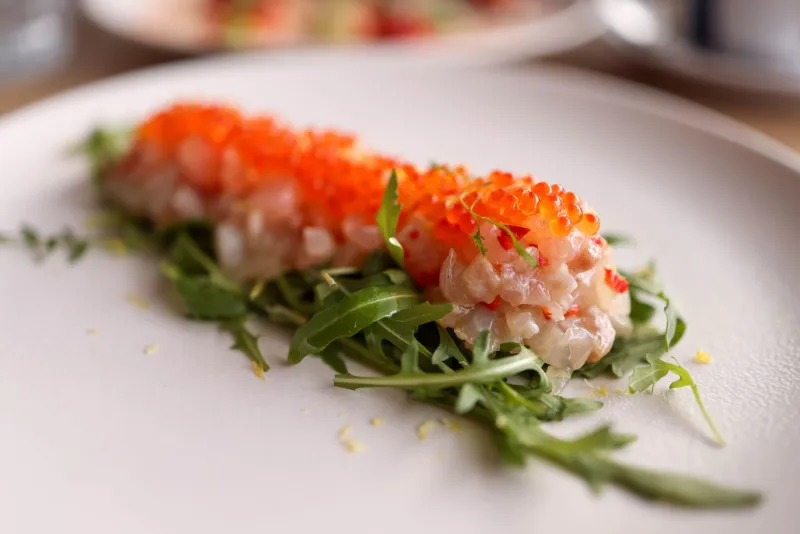
Let's paint a picture. You've made a reservation — four months in advance, obviously — at a restaurant where the chef has appeared on three magazine covers and once made a sauce using tears collected from artisanal goats. You show up in your nicest outfit. You sit down at a table with approximately one candle and a single flower that looks expensive for no reason. A server who went to theater school explains that tonight's tasting menu is "a journey." Twelve courses later, you've consumed roughly the caloric equivalent of a granola bar, spent $240 before tip, and you're texting your friend asking if they want to grab pizza.
Congratulations. You just got pranked. And the prank cost more than your car insurance.
What Even Is a "Course" Anymore?
Somewhere in the last decade, fine dining quietly redefined the word "dish." A dish used to mean food — a meaningful quantity of it, on a plate, that you could eat and feel something about afterward. Now? A dish is a single scallop resting on a smear of something green, garnished with three microgreens and what appears to be the memory of a lemon. It arrives on a piece of slate. The server tells you it "represents the tension between land and sea." You eat it in one bite. You wait eighteen minutes for the next one.
Food critics — the brave, perpetually hungry souls who actually have to eat at these places professionally — have been quietly losing their minds for years. One prominent reviewer famously described a $180 tasting menu as "technically flawless and spiritually hollow," which is the most elegant way anyone has ever said "I was still hungry when I left." Another compared a celebrated restaurant's portion sizes to "communion wafers for people who read the Financial Times."
They are not wrong.
The Instagram Industrial Complex
Here's the thing nobody talks about: a significant portion of ultra-premium restaurant culture exists not to feed people, but to be photographed. Those impossibly beautiful dishes — the ones that look like tiny edible sculptures, the ones that trend on Instagram and TikTok and get reposted by food accounts with names like @GastronomyVibes — are engineered for the camera first and the stomach approximately never.
Scroll through any major food influencer's page and you'll find dozens of these images. A single oyster floating in a pool of something translucent. A deconstructed beef dish that looks like modern art and tastes, reportedly, like "the concept of beef." A dessert served on a mirror that costs $38 and contains roughly four bites of what is essentially fancy Jell-O.
The comments are always the same: fire emojis, jaw-drop emojis, people tagging their friends saying "we NEED to go here." What the comments never include is anyone saying "and I was full afterward." Because nobody ever is. The restaurant isn't selling food. It's selling content. You are not a diner. You are a content creator who is also funding someone else's Michelin star.
The Performance Art Hypothesis
Here's a theory Cajocky is officially putting forward: nobody who eats at these restaurants actually enjoys it in a normal human way. What they enjoy is the experience of having eaten there. These are two completely different things.
Think about it. The conversation at a $300-per-head tasting menu isn't "wow, I'm so full and happy." It's a running commentary on the food itself — its construction, its concept, its audacity. People at these restaurants talk about their meals the way people talk about contemporary art installations. "What do you think it means?" "I think the chef is commenting on industrialized agriculture." "The bitterness was intentional — it's supposed to make you uncomfortable."
Being uncomfortable! That's a selling point now! You can pay $200 to be intentionally made uncomfortable by your food, which is something your grandmother would have considered a personal failure and also possibly a reason to call the health department.
And yet the waitlist is six months long. Because what these restaurants are really selling is status — the ability to say you went, to post that you went, to casually mention it in conversation while pretending you go all the time. The food is almost beside the point.
The Billionaire Trickle-Down Effect
Here's where it gets genuinely funny. Ultra-premium dining started as something that catered to actual billionaires — people for whom $400 was a rounding error and a tiny plate of food was a charming novelty between yacht trips. The problem is that trends trickle down. What starts as a billionaire's hobby eventually becomes an aspirational experience for people who absolutely cannot afford it but will absolutely do it anyway because FOMO is a more powerful force than basic financial literacy.
So now you've got regular people — accountants, teachers, marketing managers — dropping two months of discretionary spending on a single meal because a food blogger they follow went and made it look transcendent. They'll split the cost with their partner, agree not to talk about how much it was, and spend the evening photographing food they're not allowed to touch until the server finishes explaining it.
And here's the darkest part: most of them will say they loved it. Because admitting you spent that much money and didn't have a good time is a level of vulnerability most humans simply cannot access.
So Who Actually Wins?
The chef wins. The restaurant wins. The Instagram algorithm wins. The Uber driver who takes you to McDonald's afterward wins, spiritually.
You? You have a story, a slightly blurry photo of a dish that's already been composted, and a credit card statement you're going to look at in thirty days with the thousand-yard stare of someone who made choices.
Look, we're not saying fine dining is entirely without merit. Skilled chefs are genuinely artists. The technique involved in some of these kitchens is extraordinary. Some of those tiny, expensive bites really do taste like something you've never experienced before — which is wonderful, and also still not enough calories to constitute a meal.
But let's at least be honest about what's happening. Fine dining at its most extreme tier isn't really about food anymore. It's theater with an amuse-bouche. It's a status ritual dressed up in linen napkins. It's the most elaborate way humans have yet devised to spend a lot of money while remaining hungry.
The emperor, as it turns out, has no entrée. He has a beautifully plated concept of an entrée, and it pairs excellently with a $28 glass of natural wine that tastes like a barn.
Enjoy your journey.