Oats, Almonds, and Audacity: The Wellness Industry's Most Shameless Breakfast Scam
Let's set the scene. You're standing in Whole Foods, slightly dazed from the ambient eucalyptus mist, when you spot it: a mason jar filled with what appears to be gravel and dried fruit. The label features a hand-drawn mountain, a font that whispers I do hot yoga, and the word "artisanal" used without a hint of irony. The price tag reads $18.99. For granola. For oats, nuts, and honey — the same ingredients your grandmother threw together in a bowl while watching Wheel of Fortune — someone has charged you the equivalent of a sit-down brunch.
Welcome to the Great Granola Grift, the most delicious con job the wellness industry has ever pulled off.
How Did We Get Here, Exactly?
Granola has always been a little self-righteous. Born in the health food movements of the 1960s and '70s, it carried the energy of someone who bikes everywhere and corrects your recycling. But it was cheap, it was filling, and it minded its business.
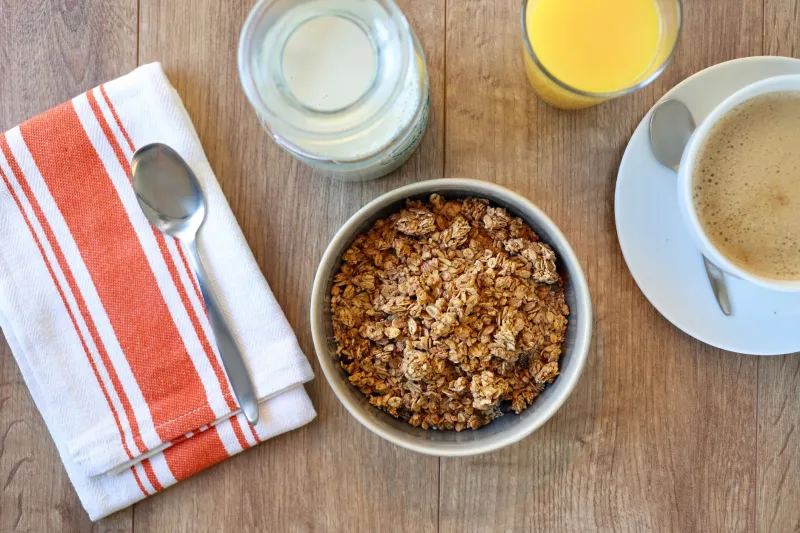
Then came Instagram. Then came the wellness influencer industrial complex. Suddenly, granola wasn't just breakfast — it was a lifestyle statement. Influencers with names like Brynn or Kelsey or Meadow started posting impossibly aesthetic shots: granola cascading into white ceramic bowls, bathed in golden-hour light, next to a linen napkin and a copy of a book they definitely didn't read. The caption? Something like: "Fueling my morning with @GlowBowlOrganics — because what you put in your body matters. Use code MEADOW for 10% off."
And just like that, oats became aspirational.
The Markup That Would Make a Pharma Bro Blush
Let's do some uncomfortable math together, because we're the kind of website that loves you enough to ruin your morning.
A 42-ounce container of Quaker Old Fashioned Oats costs about $4.50 at any grocery store in America. A bag of raw almonds? Maybe $6 for a pound. Honey, coconut oil, a pinch of sea salt — we're talking about a total ingredient cost somewhere in the $2 to $4 range per batch. A batch that, by the way, makes roughly the same amount as one of those precious mason jars.
So when a wellness brand charges $18 for 12 ounces of granola, they're not charging you for the food. They're charging you for the story. The mountain illustration. The phrase "small batch." The suggestion that eating this particular combination of seeds will somehow fix your cortisol levels, your sleep schedule, and possibly your relationship with your mother.
Some brands have gotten genuinely unhinged with it. There are granolas on the market right now made with "activated" nuts — which sounds like the nuts have been enrolled in a superhero training program but actually just means they were soaked in water. There are granolas with adaptogens, with CBD, with "moon-harvested" ingredients (yes, really), each addition providing a convenient excuse to add another five dollars to the sticker price.
The Psychology of Paying Too Much for Breakfast
Here's the thing: none of this works without us. The granola grift requires a willing participant, and American consumers have been extremely willing.
Psychologists call it "price-quality signaling" — the deeply human tendency to assume that expensive things are better things. When a product costs $18 instead of $4, our brains don't think scam. They think premium. They think I am the kind of person who invests in their wellness. The mason jar, the kraft paper label, the Instagram endorsement — these are all just expensive window dressing for a very old psychological trick.
Wellness culture has turbocharged this effect by adding a moral dimension to food choices. It's not just that cheap granola tastes worse (it doesn't, really). It's that cheap granola suggests you don't care about yourself. And who wants to be the person who doesn't care about themselves? So you buy the $18 jar. You post a photo. You use the discount code. You become, without fully realizing it, an unpaid marketing intern for someone's oat empire.
The Influencer-to-Jar Pipeline
The mechanics of how regular oats become luxury oats are almost beautiful in their shamelessness. Here's the basic playbook:
Step one: Find a generic granola recipe on Pinterest. Tweak it slightly — add some maca powder, swap regular salt for pink Himalayan, call it a proprietary blend.
Step two: Design packaging that looks like it belongs in a Scandinavian design museum. Neutral tones. Minimal text. A logo that cost more than the first month's ingredient supply.
Step three: Send free product to fifteen influencers with decent engagement rates. Encourage them to integrate it into their "morning routine" content, ideally alongside a sunrise, some journaling, and a mention of their mental health journey.
Step four: Watch the orders roll in from people who have confused wanting a influencer's life with wanting their granola.
Step five: Profit. Aggressively.
Some of these brands have built genuinely impressive businesses on this model. And look — credit where it's due. If you can convince America that your oats are worth $18, you've achieved something remarkable. That's not a food business. That's performance art.
But Is It Actually Better?
Fine. Fair question. We ate a lot of granola for this article (it was a good week, honestly), and here's our completely unscientific verdict: some of the premium stuff is genuinely delicious. When a small company actually sources good ingredients, uses real maple syrup, and doesn't burn their clusters into oblivion, the result can be noticeably better than the cardboard-adjacent stuff at the bottom of the grocery aisle.
But is it $14 better? Almost never. The gap in quality between a $5 store-brand granola and an $18 influencer granola is approximately the size of a chia seed. The gap in branding is the size of the Grand Canyon.
The honest truth is that you could make granola at home for roughly 75 cents a serving, it would take 25 minutes, and it would taste better than most of what's on the market. But making your own granola doesn't give you content. It doesn't give you a community. It doesn't give you the warm feeling of having made a choice about your wellness journey.
And apparently, that feeling is worth about $18.
The Bottom Line (Served in a Mason Jar)
The granola grift isn't going anywhere, because it was never really about granola. It's about the eternal human desire to feel like we're doing something right — eating right, living right, choosing right — in a world that offers very few guarantees. If a pretty jar of oats provides that feeling, even temporarily, people will keep buying it.
Just know what you're actually paying for. It's not the almonds. It's the aesthetic. It's the aspiration. It's the little dopamine hit of feeling like someone who has their morning routine together.
The oats themselves? Those are basically free.
Cajocky recommends: Buy the $18 granola once, just to see what the fuss is about. Then make your own and spend the leftover money on literally anything else.