You Paid $22 for Fairy Dust on a Pancake and You'd Do It Again
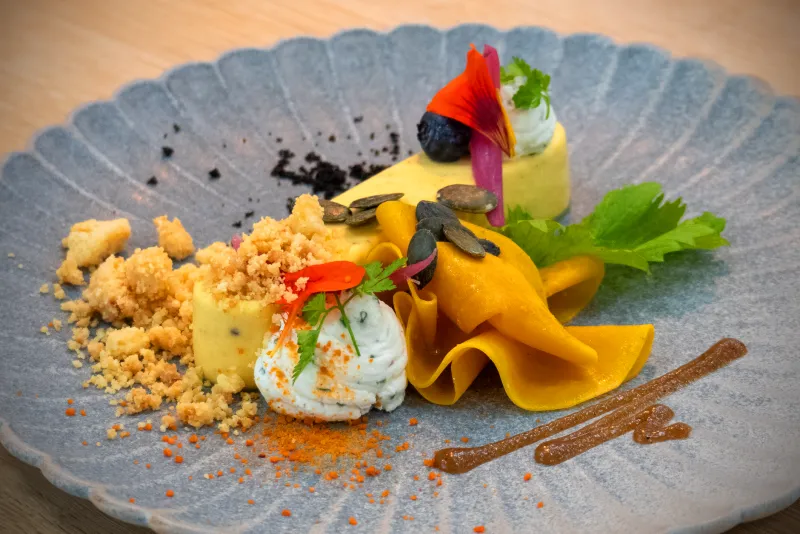
Somewhere in Brooklyn right now, a person with a film degree and a maxed-out Visa is waiting forty-five minutes to be seated at a restaurant where the signature dish is a single ricotta pancake dusted with edible gold leaf, garnished with a micro-orchid, and served on a slate tile that costs more than the food itself. The pancake is fine. The pancake is, nutritionally and emotionally, a pancake. But the photo? The photo is immaculate.
Welcome to the dopamine menu — where the dish is the advertisement, the customer is the content creator, and the markup is completely, utterly unhinged.
The Moment Food Stopped Being About Eating
Let's establish a timeline. Pre-Instagram, a beautiful plate of food was a bonus. Chefs took pride in presentation, sure, but the primary goal was still flavor. Then somewhere around 2012, a generation of food bloggers discovered that a perfectly lit latte art photo could get ten thousand likes, and the entire restaurant industry quietly pivoted its entire business model.
By 2018, 'Instagrammable' had become a legitimate design criterion for restaurant interiors. By 2022, restaurants were engineering dishes specifically backward — starting with the visual concept and working toward something technically edible afterward. By 2024, you can order a cocktail that arrives in a smoking cauldron, a burger wrapped in 24-karat gold foil, or a dessert that literally explodes tableside while a server films you on your own phone.
None of this makes it taste better. Everyone knows this. We're paying anyway.
The Psychology of the Pretty Plate
Here's where it gets genuinely fascinating rather than just depressing. Neuroscientists who study consumer behavior have a term for what's happening when you see a dish that makes you reach for your phone before your fork: anticipatory reward. Your brain fires dopamine not when you eat the thing, but when you see it and imagine the social validation the photo will generate.
Restaurants have essentially hacked this mechanism with the precision of a pharmaceutical company. The edible glitter isn't seasoning — it's a dopamine delivery system. The flower you're not supposed to eat is a psychological trigger. The ridiculously oversized martini glass exists purely to make you feel like you're experiencing something worth documenting.
And the truly devious part? The experience is worth documenting, kind of. Because the memory you're buying isn't the taste of the food. It's the fifteen minutes of social media engagement afterward. When you frame it that way, twenty-two dollars for a sparkly pancake almost makes sense. Almost.
A Brief Tour of the Most Audacious Markups in Recent Memory
Let's look at some real-world evidence, because the examples are too good not to share.
The 'color-changing' cocktail trend — drinks that shift from blue to purple when you add a citrus squeeze — swept upscale bars nationwide, adding anywhere from six to twelve dollars to the price of what is otherwise a gin and tonic with butterfly pea flower tea in it. Butterfly pea flower tea costs approximately four cents a serving wholesale. The color change takes three seconds. The markup is eternal.
Croissants filled with Fruity Pebbles, ramen topped with lobster claws arranged to look like they're crawling out of the bowl, 'deconstructed' everything (which is chef-speak for 'we put the components in separate piles and charge forty percent more') — all of these exist primarily as content, and all of them have lines around the block.
One New York restaurant famously served a 'cloud egg' — an egg white whipped into a meringue nest with the yolk dropped back in — for sixteen dollars. It took off entirely because of one viral photo. The dish itself was, by all accounts, texturally unsettling. It sold out every day for six months.
The Restaurants Aren't Entirely Wrong, Though
Here's the uncomfortable truth that any honest analysis has to acknowledge: this strategy works because it delivers something of real value. Just not nutritional value.
A restaurant that goes viral because of a photogenic dish gets free advertising worth tens of thousands of dollars. The customer gets content, social currency, and a memorable experience. The markup isn't entirely irrational — it's pricing in the theater, the novelty, and the shareable moment. You're not paying eight dollars for edible glitter. You're paying eight dollars for the story you get to tell, the post you get to make, and the temporary identity upgrade that comes with being someone who eats at places like this.
Is that worth eight dollars? Honestly, some people have spent more on worse things. We're looking at you, every NFT purchased between 2021 and 2022.
How to Eat in 2024 Without Losing Your Entire Mind
The solution isn't to swear off all experiential dining — that's both joyless and impractical, because some of these places genuinely do interesting things with food alongside the spectacle. The solution is just to know what you're actually buying.
If you're dropping fifty dollars on a tasting menu because you love innovative cuisine, great. If you're dropping fifty dollars because you want the content, also great — just be honest with yourself about it. The worst version of this whole phenomenon isn't the spending. It's the spending combined with the self-delusion that you're a serious food person when you're actually just a content creator who happened to be hungry.
The restaurants know what they're selling. The question is whether you know what you're buying.
Now if you'll excuse us, there's a place in Los Angeles that serves a single bite of wagyu beef on a tiny throne with a tiny crown, and we have a reservation at 7pm. For journalism purposes. Entirely for journalism.