This Golden Retriever Has a Sponsorship Deal and You Have Student Loans: A Career Counseling Session
Let's talk about Noodle. Noodle is a thirteen-year-old pug who became famous for a TikTok series in which his owner lifts him up every morning to determine whether he will stand up (a 'bones day,' indicating good fortune ahead) or flop back down (a 'no bones day,' indicating everyone should cancel their plans and eat soup). Noodle has appeared in major media outlets. Noodle has merchandise. Noodle, at the height of his fame, was setting the emotional tone for millions of Americans before they'd even had coffee.
Noodle is a pug. Noodle has never filed a tax return. Noodle has no LinkedIn.
And Noodle, in the brutal meritocracy of the attention economy, out-earned most journalists.
The Numbers Are Real and They're Spectacular
Before we get into the existential spiral, let's establish the actual scale of what's happening here, because the pet influencer economy isn't a cute niche phenomenon anymore. It's a legitimate industry with legitimate money attached to it.
Top-tier animal accounts on Instagram and TikTok — and we're talking dogs, cats, rabbits, the occasional hedgehog — command anywhere from $5,000 to $50,000 per sponsored post, depending on follower count and engagement rate. Grumpy Cat, before her passing in 2019, had earned an estimated $100 million in licensing and brand deals. Doug the Pug has a book deal, a merchandise empire, and has appeared in music videos. Jiffpom, a Pomeranian with 10 million Instagram followers, has a Guinness World Record for fastest dog on two paws and, presumably, a better agent than most human actors.
These aren't flukes. The pet influencer market was valued at over $20 billion in the broader pet industry, with influencer marketing representing a significant and growing slice of that. Brands targeting pet owners — which includes, at this point, approximately every consumer brand because everyone has a pet — have discovered that animals generate engagement rates that human influencers can only dream about.
The math is depressing. We're sorry.
Why Animals Win the Algorithm Every Single Time
Here's the thing that makes this especially galling for human content creators: it's not even close. Animal content consistently outperforms human content across virtually every platform metric. More shares, more saves, more comments, more watch time. The algorithm, that cold and indifferent judge of all things, loves a dog in a sweater more than it loves your carefully crafted take on current events.
The psychology isn't complicated. Animals are safe. They can't say anything offensive. They can't be canceled. They don't have bad takes on Twitter. They exist in a state of pure, brand-safe adorableness that no human influencer can maintain indefinitely, because humans are messy and complicated and eventually say something regrettable at a dinner party.
A corgi wearing a tiny Halloween costume generates zero controversy. A corgi has never been screenshot out of context. A corgi's old posts cannot be weaponized against it. From a brand partnership perspective, a corgi is essentially a perfect spokesperson.
The Human Behind the Paw: A Portrait in Contradictions
Now, to be fair — and we're going to be fair for exactly one paragraph — the pet influencer business is actually run by a human who does real work. Filming content, editing videos, managing brand partnerships, responding to comments, tracking analytics, negotiating deals — this is genuinely labor-intensive, and the person doing it deserves credit for building something out of nothing.
That said, the credit structure is absurd. The human is the CEO, the creative director, the social media manager, and the talent wrangler all at once, but the talent — the actual face of the operation, the one whose name is on the account, the one who gets recognized at PetSmart — is a cat who is currently asleep on a heated blanket.
The cat contributes: existing, occasionally being cute, and tolerating the ring light. The human contributes: everything else. The cat gets top billing. The cat gets the fan mail. The cat gets the plushie made in its likeness. The human gets to tell people at parties that they 'manage a pet influencer account,' which is a sentence that still causes a full second of confused silence before people decide how to respond.
The Truly Unhinged Part: The Competition
If you are a human trying to build a following online — a writer, a comedian, a chef, a fitness person, a small business owner — you are competing for the same algorithmic real estate as these animals. The same feed. The same attention. The same brand budgets.
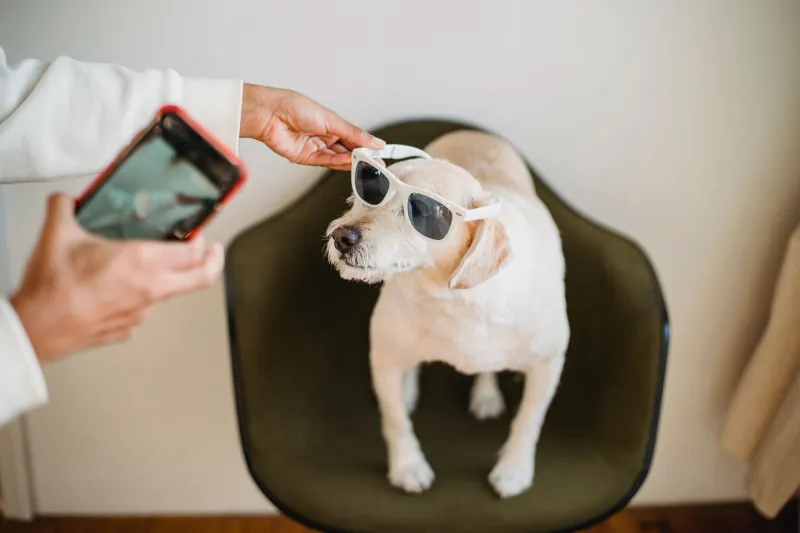
You have opinions, expertise, personality, and years of developed skill. Your competitor has a hat. A tiny hat, specifically, placed on a cat who clearly does not want to be wearing it, and that cat is going to get 400,000 views by Thursday.
There is no lesson here. There is no pivot we can suggest. We just think you should know the terms of the competition you've entered.
What the Pet Economy Actually Tells Us About Everything
Step back from the absurdity for a second and the pet influencer phenomenon reveals something genuinely telling about where we are culturally. In an online environment saturated with human anxiety, human conflict, human performance, and human opinion, people are desperately seeking content that is none of those things.
Animals aren't performing wellness. They aren't optimizing their personal brand. They aren't documenting their morning routine to establish authority in their niche. They're just being animals, which in 2024 is apparently the most radical and refreshing thing you can put on the internet.
The pet influencer boom is, at its core, a massive collective exhale. Everyone is so tired of humans being humans that they've decided a French Bulldog doing zoomies is worth more of their attention than almost anything a person could say.
Is that bleak? Maybe. Is Biscuit the Labrador going to let it ruin his afternoon nap? Absolutely not. Biscuit has a nap scheduled, a brand deal with an organic treat company, and absolutely zero student debt.
Must be nice, Biscuit. Must be nice.