Brain Hacked at the Breadsticks: The Sneaky Science Restaurants Use to Make You Spend $28 on Pasta
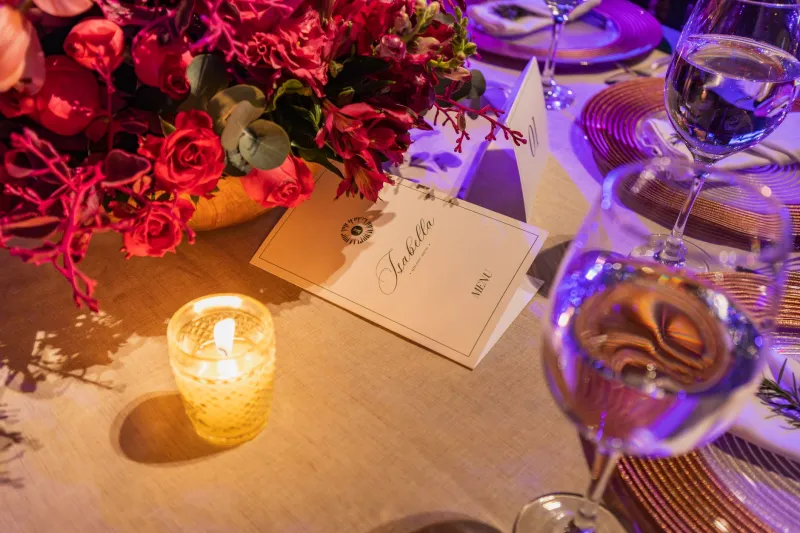
Let's set the scene. You sit down at a restaurant that smells like candles and ambition. A server hands you a menu printed on what appears to be reclaimed barn wood pulp. You squint at words like 'heritage grain tagliatelle' and 'sun-kissed heirloom tomato reduction' and think, wow, this place really knows what it's doing. Then you hand over your credit card for $28 worth of pasta that, at home, would cost you $1.79 and eleven minutes.
You were not robbed. You were engineered.
Welcome to the dopamine economy of the American dining scene, where behavioral psychology, color theory, and strategic adjective deployment conspire to make you feel like a refined, cultured adult while your bank account quietly weeps into a bread basket.
The Menu Is Not a Menu. It's a Trap.
Restaurant menus are one of the most studied documents in consumer psychology. That's not an exaggeration — hospitality researchers have spent actual decades figuring out exactly where your eye travels when you open a two-page spread, how long you linger on certain sections, and which price formats make you flinch the least.
Here's the big one: removing the dollar sign. Restaurants that list prices as 28 instead of $28 consistently generate higher spending per table. Why? Because your brain, precious and easily fooled, associates the dollar sign with the visceral pain of losing money. Without it, 28 is just... a number. A friendly little number hanging out next to the word 'tagliatelle.' No big deal.
Then there's menu placement. The upper right corner of a two-page menu is prime real estate — it's where your eye naturally lands first, which is exactly where restaurants park their highest-margin items. Not the most expensive things. The most profitable things. There's a difference, and that difference is the reason the salmon is always front and center.
The Language Is Doing Illegal Things to Your Appetite
Descriptive menu language increases sales. Full stop. A study out of Cornell University found that dishes with evocative descriptions — think 'slow-roasted Appalachian chicken with hand-harvested rosemary' versus just 'roast chicken' — sold significantly more and were rated as tasting better by diners. Same dish. Different words. Completely different perceived value.
Restaurants know this. Which is why your pasta is never just pasta. It's 'stone-milled Sicilian semolina pasta, hand-rolled by someone named Marco who definitely exists.' The word 'hand' alone is doing heavy lifting on that menu. Hand-rolled. Hand-crafted. Hand-selected. At a certain price point, everything was apparently assembled by human hands, as opposed to what — robot hands? Alien hands? The mystery is part of the charm.
Geographic descriptors are another favorite weapon. 'Napa Valley olive oil.' 'Hudson Valley duck.' 'Maine lobster.' These words aren't just telling you where the food is from — they're triggering associations with quality, prestige, and the vague sense that someone, somewhere, really cared about this duck personally.
Your Plate Is a Psychological Illusion
Now let's talk about the plate itself, because the food hasn't even arrived yet and you're already three tricks deep.
Fine dining establishments are notorious for what food critics diplomatically call 'negative space' and what the rest of us call 'there are four ravioli on this plate and I can still see the ceramic.' The logic is counterintuitive but devastatingly effective: less food, presented with architectural precision, reads as more luxurious than a heaping portion. A generous pile of pasta signals Olive Garden. Five perfectly arranged gnocchi on a wide white plate signals experience.
The plate color matters too. White plates make food look brighter and fresher. Round plates, studies suggest, make sweet food taste sweeter. Heavier cutlery makes food taste more premium — yes, researchers actually tested this, because science has priorities. Restaurants that invest in heavy silverware are literally hacking your perception of flavor before a single bite.
And the lighting. Oh, the lighting. That warm amber glow isn't just romantic — it makes food look more saturated and appetizing while simultaneously making it harder to read the menu clearly enough to notice you're ordering a $22 side salad.
Instagram Didn't Ruin Dining. Dining Exploited Instagram.
Here's the twist nobody wants to admit: the Instagrammability of a dish is now a deliberate design feature, not a happy accident. Restaurants hire food stylists. They test plates under ring lights before they ever hit a table. That tower of colorful ingredients, that dramatic sauce drizzle, that edible flower perched at a jaunty angle — all of it was stress-tested for maximum shareability.
Why? Because a customer who posts their $34 entrée to Instagram just became an unpaid marketing employee. Every reshare is an ad. Every saved post is a future reservation. The restaurant didn't just sell you dinner; it sold you a content opportunity, and you paid them for the privilege.
The most telling detail? Dishes designed for social media virality are rarely the tastiest things on the menu. They're the most visually dramatic. The deconstructed s'mores. The smoking cocktail. The cotton candy cloud served over a martini glass. These things exist to be photographed, shared, and forgotten — and they are priced accordingly.
So Are We Just Doomed to Be Fooled Forever?
Not necessarily. Awareness is a decent shield, even if it's not a perfect one. Knowing that the upper-right menu placement is a trap won't stop you from looking there, but it might make you pause before ordering the $42 scallops that definitely have the highest margin in the kitchen.
You can also try the radical act of asking your server what they like. Not what's popular. Not what's new. What they actually eat. This short-circuits the entire menu engineering apparatus and often leads to the best, most honestly priced dish on the menu — the one that doesn't need a paragraph of adjectives to justify its existence.
Or, you know, you could just make pasta at home for $1.79.
But where's the dopamine in that?