Fashion Brands Are Now Selling You Brain Chemicals and Charging a Premium for the Privilege
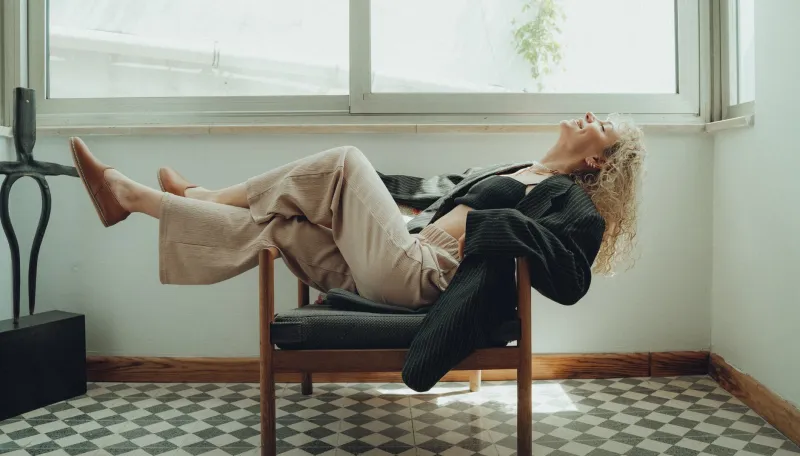
Somewhere between the death of dopamine dressing and the birth of whatever circle of wellness hell we're currently occupying, the fashion industry made a pivot. A quiet, expensive, suspiciously science-adjacent pivot. They looked at their mood boards, they looked at their margins, and they thought: what if we stopped selling clothes and started selling neurochemistry?
Welcome to serotonin suiting. Please check your credit card limit at the door.
A Brief History of Selling You Your Own Emotions
Dopamine dressing had a good run. The premise was simple and honestly kind of fun: wear bright, bold, maximalist pieces and trigger your brain's reward system. Joy! Color! A chartreuse blazer that made your coworkers mildly concerned! The movement had genuine cultural staying power through the post-pandemic reopening era, when people wanted to signal that they were, in fact, still alive and willing to make bold choices.
But dopamine dressing has a problem. It's too accessible. You can dopamine dress from the Target clearance rack. A $14 yellow sundress technically qualifies. And that, my friend, is not a scalable luxury business model.
Enter serotonin suiting: the quieter, more "sophisticated" cousin that trades neon for earth tones and maximalism for intentional simplicity. Instead of "this bright color makes you happy," the new pitch is "this carefully sourced, ethically produced, naturally dyed linen garment is calibrated to promote sustained mood stability and neurological wellbeing." It's dopamine dressing for people who've graduated to $18 oat lattes and talk about their nervous system regulation in casual conversation.
The price difference is, to put it charitably, significant.
What Is Serotonin Suiting, Actually?
Depending on who you ask, serotonin suiting is either a meaningful evolution in conscious fashion or the most audacious marketing flex since someone convinced us that water needed a vibe.
The aesthetic leans into muted, organic palettes — think warm terracotta, sage green, soft ivory, dusty clay. The fabrics are natural: linen, organic cotton, hemp, bamboo. The cuts are intentionally unhurried, loose but structured, the sartorial equivalent of a deep breath. Everything about the look says "I have achieved inner peace and also a functional 401k."
Brands in this space are very deliberate about their language. They don't just describe a shirt as comfortable — they describe it as "designed to reduce cortisol through tactile ease." They don't just say a color is calming — they cite the emerging field of chromotherapy and gesture vaguely at studies. The word "grounding" appears approximately forty-seven times per product page. "Nervous system" is doing a lot of heavy lifting in the copywriting.
And the prices? A linen blazer in the serotonin suiting universe will run you anywhere from $240 to $450. A pair of organic cotton wide-leg trousers: $180 to $320. A naturally dyed cotton-silk blended top described as "a hug for your autonomic nervous system": $195, and yes, that is a real description category that exists.
We Asked an Actual Neuroscientist
Because we are committed to journalism (and also deeply suspicious), we reached out to ask whether any of this holds up scientifically.
The short answer is: sort of, but not in the way the brands want you to think.
"There is real research on how clothing affects mood and cognition — it's called enclothed cognition," explains Dr. Priya Nair, a cognitive neuroscientist who studies sensory experience. "How you feel in your clothes, how they fit, how they feel against your skin — these things genuinely affect your psychological state. But the mechanism isn't the serotonin system in the way these brands are implying. It's much more about self-perception and comfort."
In other words: yes, wearing something that feels good and makes you feel good about yourself can positively affect your mood. That part is real. The part where a specific earth-toned linen blazer is uniquely calibrated to your neurotransmitters? Less real. The part where it has to cost $380 to achieve this effect? Absolutely, categorically, laughably not real.
"A comfortable, well-fitting garment in a color you like can improve your mood regardless of the price point," Dr. Nair adds. "The premium you're paying for the 'wellness' framing is essentially a premium on the belief that it works. Which is a placebo — and placebos do work, but you're paying a lot for that particular magic trick."
Three hundred and eighty dollars for a magic trick. Fashion really said "name your price" and then answered its own question.
The Customer Is Always Right (About Wanting to Feel Better)
Here's the uncomfortable truth that sits underneath all of this: the serotonin suiting market exists because people are genuinely struggling and genuinely looking for solutions. Anxiety rates are up. Burnout is endemic. The desire to feel calmer, more grounded, more like a functioning human being is completely legitimate and deeply understandable.
Fashion has always sold aspiration, but it used to be aspiration toward status or beauty or belonging. Now it's aspiring toward basic neurological stability. Which tells you something about the moment we're living in, and it's not a particularly cheerful something.
The brands aren't wrong that how we dress affects how we feel. They're just aggressively monetizing a psychological truth and dressing it up (pun fully intended) in pseudoscientific language to justify price points that would make a dermatologist blush.
So Does the $340 Blazer Actually Work?
For the purposes of this investigation, we spoke to several confirmed serotonin suiting purchasers. Results were mixed in the most human way possible.
Dana, 31, from Portland, bought a $290 sage linen blazer from a wellness-forward brand last spring. "I do feel calmer when I wear it," she reports. "But I also felt calmer when I wore my old $40 linen blazer from ASOS. I think the $250 difference went toward the story I'm telling myself."
Marcellus, 28, from Brooklyn, purchased an entire "mood-regulating capsule wardrobe" from a brand that shall remain nameless, at a total cost of approximately $900. "I felt great for about three weeks. Then I had a genuinely bad month and the capsule wardrobe did not capsule-wardrobe its way out of it. I still wear the pants though. They're very comfortable."
Kira, 34, from Seattle, is a committed skeptic who bought one piece as an experiment. "It's a nice shirt. It fits well. I feel fine in it. I feel fine in my other shirts too. I think I just like linen."
The data is, as they say, anecdotal. But the pattern is consistent: the clothes are often genuinely pleasant. The neurochemical transformation remains unconfirmed.
The Verdict
Serotonin suiting is dopamine dressing for people who've decided that wanting to feel good is a personality trait that requires significant financial investment. The clothes are frequently lovely. The science is decorative. The markup is aggressive. And the fact that "mood-boosting linen" is a category that exists and thrives tells us more about the current state of American anxiety than any wellness study ever could.
Wear what makes you feel good. If that's a $380 naturally dyed blazer, genuinely no judgment — life is short and comfort is real. But maybe also consider that your nervous system cannot read a price tag. It just wants you to be okay. And sometimes okay comes from a good night's sleep and a shirt that fits, regardless of whether a brand's copywriter has described it as "a chromatic meditation on sustainable ease."
That last one was real, by the way. We couldn't have made it up.