Grown Adults Are Spending Vacation Money on Tiny Plastic Figures and Calling It Investing
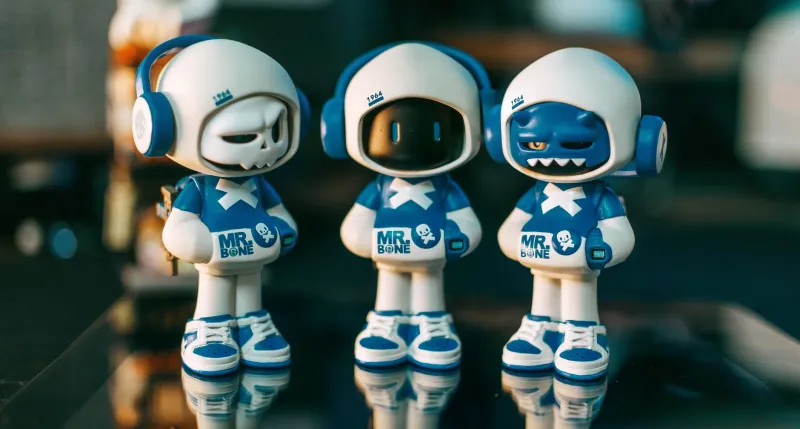
There is a man in Chicago who owns forty-three KAWS figures, keeps them in a climate-controlled room, and has not touched a single one with his bare hands since he bought them. He wears cotton gloves when he dusts them. His name is Derek, he is thirty-seven years old, and he would like you to know that his collection is currently valued at more than his car.
Derek is not unusual. Derek is, increasingly, the norm.
Welcome to the Toy Market. Please Do Not Touch the Merchandise.
The adult collectibles market has quietly exploded into a multi-billion-dollar industry that makes the Beanie Baby craze of the late '90s look like a very charming warm-up act. We're talking designer vinyl toys, luxury action figures, limited-edition artist collaborations, and blind box series — those delightful little mystery packages where you pay $20 and might get the rare chase variant worth $200, or might get the common one you already own four of.
Major players in this space include KAWS (whose figures regularly sell for tens of thousands at auction), Medicom Toy, Funko (yes, those big-eyed Pop! figures are absolutely part of this ecosystem), and a rotating cast of streetwear-adjacent brands like Supreme and Bape who release figures that sell out in eleven seconds and immediately hit StockX for triple the retail price.
The global designer toy market was valued at around $9.8 billion in 2022 and is projected to keep climbing. For context, that's more than the entire global market for actual children's toys in several individual product categories. Grown adults have, without any apparent embarrassment, simply outspent the children.
The Psychology of the Unboxed
Here's the thing that makes adult toy collecting genuinely fascinating from a psychological standpoint: most serious collectors never play with their toys. Many don't even take them out of the box. The box is, in many cases, the entire point.
Dr. Russell Belk, a consumer behavior researcher who has studied collecting culture extensively, describes collecting as a form of extended self — the idea that our possessions become part of our identity. For collectors, acquiring a rare piece isn't just a purchase. It's an assertion of who they are: someone with taste, with access, with the cultural knowledge to even know that a particular figure existed and the reflexes to score one before it sold out.
This is why the "W" (win) of landing a limited drop hits like a dopamine spike that would be concerning if it weren't so relatable. You didn't just buy a toy. You competed. You refreshed the checkout page seventeen times. You were faster than 40,000 other people who wanted the exact same thing. That's not consumerism. That's sport.
"I don't think of them as toys," said Kevin, a 29-year-old software engineer from Seattle who has spent approximately $15,000 on designer figures over the past three years. "They're art objects. They happen to look like cartoon bears."
The cartoon bears in question are part of a series that retails for $80 and currently moves on the secondary market for $300 to $600 depending on colorway. Kevin has seven of them. He keeps them on a backlit shelf above his desk and photographs them regularly for his Instagram, which has 4,200 followers who are entirely there for the toy content.
Blind Boxes: Legal Gambling for People Who Shop at Target
If you want to understand the true psychological genius of the modern toy collecting market, look no further than the blind box.
The concept is simple: you buy a sealed package containing one figure from a series, but you don't know which one until you open it. Each series typically has eight to twelve common figures and one or two "secret" chase variants that appear in roughly one out of every 72 boxes. The chase variants are, naturally, worth dramatically more on the secondary market.
This is, structurally speaking, a slot machine. A very cute, pastel-colored slot machine that you can buy at Target for $13.99.
Pop Mart, the Chinese company that has essentially perfected this model, opened its first US flagship store in 2023 and reported that American consumers were buying blind boxes at a rate that surprised even them. People were buying entire cases — 12 boxes at a time — to increase their odds of hitting a chase. People were trading duplicates on dedicated Facebook groups and Discord servers with the seriousness of a commodities exchange.
"I've spent maybe $400 on one series trying to get the secret figure," admitted Priya, a 32-year-old marketing manager from New York, with the calm delivery of someone who has made peace with this information about themselves. "I eventually just bought it on eBay for $85. Which, if I'm being honest, I should have done from the start."
She has not stopped buying blind boxes.
The Investment Argument (And Whether It Holds Up)
Every collector, at some point, makes the investment argument. This is the moment when the hobby justifies itself financially, when the significant other stops giving the look, when the credit card statement becomes a portfolio statement.
"KAWS figures have genuinely appreciated," noted Derek from Chicago, accurately. "The ones I bought for $200 in 2018 are worth $1,500 now."
This is true. Some designer toys have outperformed traditional investment vehicles. KAWS's "Companion" figures have sold at Christie's and Sotheby's. A 2021 KAWS x Dior collaboration figure that retailed for $1,500 was reselling for over $8,000 within weeks. The numbers are real.
What is also real: for every KAWS success story, there are thousands of figures that peaked at a 30% secondary market premium and have since returned to retail value or below. The collecting market, like all speculative markets, requires extraordinary timing, taste, and a willingness to hold — which is harder to do when your "portfolio" is taking up an entire bedroom shelf and your partner is starting to mention the word "storage unit."
The Community Is the Product
Maybe the most underappreciated aspect of adult toy collecting is what it provides beyond the objects themselves: community. Collector conventions like DesignerCon in Anaheim draw tens of thousands of attendees. Online communities on Reddit, Discord, and Instagram create spaces where people who might otherwise have nothing in common bond deeply over shared taste and the shared trauma of missing a drop.
For a generation that grew up playing with action figures and was then told to put childish things away, the collector community offers something quietly radical: permission to keep caring about the things that made you happy before the world got complicated.
Derek puts it simply: "When I'm arranging my shelf, I'm not thinking about my mortgage or my email inbox. I'm just thinking about which figure looks best next to which other figure. It's the most peaceful part of my day."
The cartoon bear with the skull face is not judging him. The cartoon bear, frankly, looks thrilled.