Flour, Guilt, and Tears: The Emotional Autopsy of Your Dead Sourdough Starter
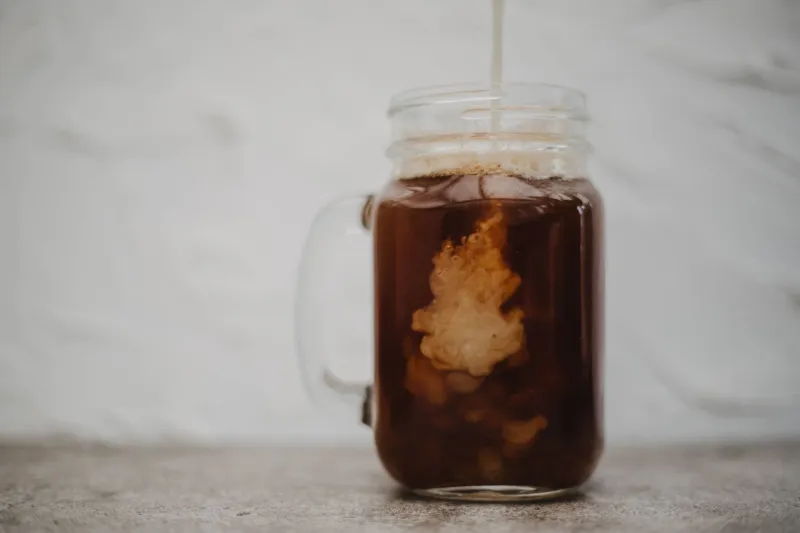
Somewhere in America right now, there is a mason jar in the back of a refrigerator that hasn't been opened since 2021. It contains what was once lovingly named Gerald, or Doughlores, or Sir Ferments-a-Lot. It smells like a college dorm room and a broken promise had a baby. And the person who owns that refrigerator absolutely cannot bring themselves to throw it out.
Welcome to the Sourdough Graveyard. Population: everyone who watched too many YouTube tutorials during lockdown.
The Great Flour Panic of 2020
Let's set the scene. It's April 2020. You've reorganized your closet twice, binged every Netflix documentary about cults, and discovered that you do, in fact, hate your couch. The grocery store shelves look like a post-apocalyptic movie set — no pasta, no toilet paper, and somehow, no flour. All-purpose flour had become the new gold. People were hoarding King Arthur like it was currency.
And yet, against all rational logic, millions of Americans decided that this was the moment to take up bread baking. Not just any bread — sourdough. The diva of breads. The bread that requires a living, breathing, feeding companion called a starter, which is basically just a jar of fermented flour and water that you must tend to like a very needy Tamagotchi.
Between March and May 2020, Google searches for "sourdough starter" increased by over 4,000 percent. King Arthur Flour's website crashed. Entire Facebook groups formed overnight with names like "Sourdough Mamas" and "The Wild Yeast Collective," where people posted photos of their bubbly jars with the same pride and frequency that new parents post baby photos.
Because that's exactly what these starters were to people: babies.
You Named It. That Was Your First Mistake.
Here's where the science gets personal. A sourdough starter is, technically speaking, a living ecosystem of wild yeast and lactic acid bacteria. Feed it flour and water on a regular schedule, keep it at the right temperature, and it will bubble and rise and eventually make you bread that tastes like it came from a San Francisco bakery that charges $14 a loaf.
But the moment you name it? You're cooked. Emotionally speaking.
Tamara, a graphic designer from Austin, Texas, named her starter "Breadwin Neeson" and fed him every morning at 8 a.m. "I would talk to him," she admitted. "Like, 'Good morning, buddy, how are we feeling today?' And I genuinely felt good when he was bubbling. Like I had done something right as a person."
Psychologists will tell you this is called "anthropomorphization" — the deeply human tendency to assign personality and emotion to non-human things. What they won't tell you is how absolutely devastating it is when your anthropomorphized jar of fermented goop stops bubbling and starts growing a layer of gray liquid on top that looks like something out of a horror film.
That gray liquid, for the record, is called "hooch." It means your starter is hungry and mildly protesting. It's totally fixable. But to a first-time sourdough parent in the middle of a global pandemic, it looks like death.
The Five Stages of Starter Grief
Grief, it turns out, has a sourdough edition.
Denial: "It's just hooch. It's fine. It's totally fine. I'll feed it extra today."
Anger: "I BOUGHT BREAD FLOUR SPECIFICALLY FOR THIS. DO YOU KNOW HOW MUCH BREAD FLOUR COSTS RIGHT NOW?"
Bargaining: "Okay, what if I move it to the counter? What if I sing to it? What if I watch the Ken Forkish video one more time?"
Depression: The jar gets pushed to the back of the fridge. You order pizza. You don't make eye contact with the mason jar section at Target.
Acceptance: You tell people you "took a break" from sourdough, which is the bread-baking equivalent of saying you and your ex are "on a break."
Marcus from Denver went through all five stages in approximately eleven days. "I was doing everything right," he insisted, still sounding slightly defensive three years later. "I had the thermometer. I had the Dutch oven. I even had the linen proofing basket. And then I went on a camping trip for four days and when I came back, Gluten Thurman was just... gone. She smelled like nail polish remover."
(The nail polish remover smell, for the curious, is ethanol — a byproduct of yeast overeating. It means your starter went full feral while you were away. Still fixable! But again, in the moment, it feels like a funeral.)
What Bread Said About Us
Here's the thing nobody wants to admit: the sourdough obsession was never really about bread.
It was about control. In a period when literally nothing in the world made sense, when every news alert felt like a punch in the stomach, making bread gave people a project with a beginning, middle, and end. A thing you could do. A thing that responded to care and attention and produced a tangible, edible result.
Sourdough, specifically, appealed because it was hard. It required patience, precision, and daily commitment. It was a challenge you could master. And in 2020, mastering anything — even a jar of bacteria — felt like a genuine victory.
The fact that so many starters died isn't a failure of skill. It's a pretty accurate portrait of the pandemic experience itself: we started things with enormous enthusiasm and genuine hope, and then life kept happening, and the jar got pushed to the back of the fridge, and eventually we all just... ordered pizza.
The Ones Who Never Gave Up
But here's the redemption arc. Not everyone abandoned ship. A small, devoted community of sourdough obsessives kept going. They now bake weekly, have graduated to whole wheat and rye varieties, and speak about fermentation schedules with the casual authority of people who have absolutely found their thing.
Jennifer from Portland has been maintaining her starter, "Yeastie Boys," for four consecutive years. "He's family at this point," she said, and she was not joking even a little bit. She's brought him on road trips in a cooler. She dried and mailed a sample to her sister in Chicago "as a gift."
Is that unhinged? Absolutely. Is it also kind of beautiful? Also yes.
The sourdough era left behind more than a few dead jars and a lingering flour debt. It left behind a generation of people who learned, briefly, what it felt like to slow down and tend to something small and alive and entirely dependent on their attention.
Gerald the starter may be gone. But the lesson? That one's still bubbling.